
- In the Agatha Christie novel The Murder of Roger Ackroyd (1926), a country gentleman character is introduced as in fact by that time already an anachronism: the narrator explains that certain local gentleman of means who would travel frequently to London were indeed important figures at the rural pubs of their day, because they could relate stories of London to the village folk; but of course this was before photographic magazines became popular and completely replaced the actual person and this one time living institution of sorts (photojournalism is considered to have originated in its more or less contemporary form as early as the 1890s.)

2. The original living institution of the Fa’afafine can be understood from a structural standpoint as lending invigoration to sedentary human groups by drawing on psycho-physiological tensions present universally in individuals in terms of normative, non-normative sexuality. A tension, then, that helps to reinforce -specifically as physiological invigoration- the working stability of in fact the normative order itself, which ends up enduring thanks to such invigoration! In western society, however, such a function is not usually made logically explicit (according to whatever particular cultural semiotics), although the underlying physiological, and physiologically opprobic reality is the same. An example of a western cultural exercise in the structural function of the Fa’afafine can be observed in something like The Rocky Horror Picture Show (1975), in which the physiological and necessarily moral tension of conflicting sexual impulses in the individual are made explicit and turned into a kind of activity -or game- albeit of no immediate corporal consequences:

But the importance to human groups is by no means to eliminate or completely repress this tension, but rather to exploit it as resource towards sustained invigoration of, especially, the sedentary group, given that human physiology and the opprobic configuration of social individuality is a constant. And once again it would seem that originally nomadic human groups must accommodate the anachronism of their own physiological nature to posterior, sedentary circumstances: the importance of a moral social self becomes, in general but specifically as an aesthetic phenomenon, a resource of physiological, physio-opprobic invigoration in substitution of actual physical movement.
https://en.wikipedia.org/wiki/Fa%27afafine

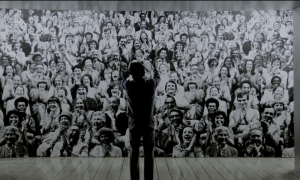
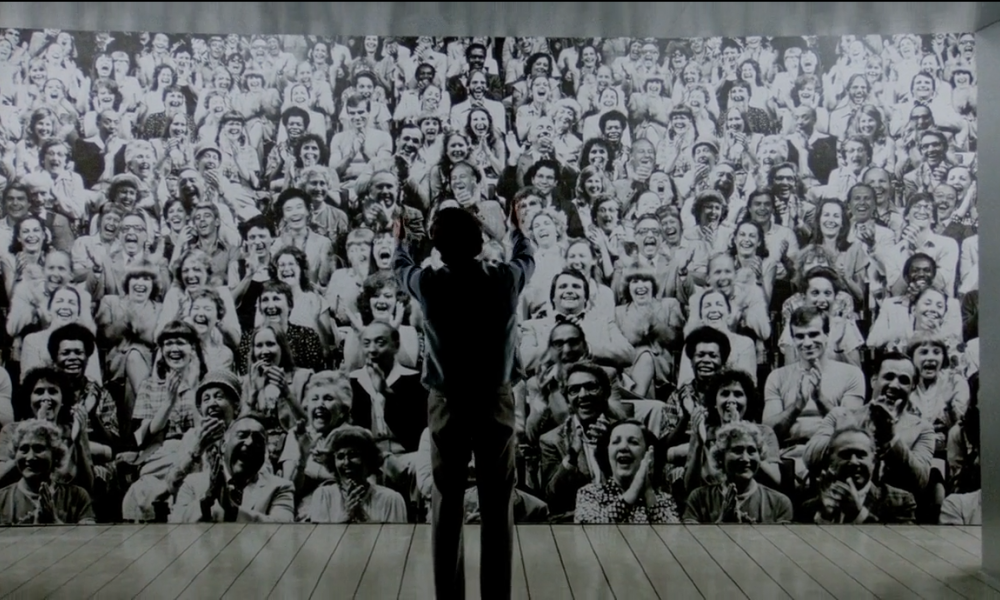
3. Originally western, technologically-based anthropological experience has moved away from the corporal and into the purely physiological in many other forms: the question of a surveillance reality is in itself an induced state of physiological alarm that basically makes aesthetic one’s sense of bodily self; that is to say, the bodily is, in the end, displaced to a cultural periphery the center of which is really individual physiological-metabolic invigoration. And specifically, it is the individual’s opprobic sense of a moral self that is targeted by the camera’s lens, so that we may come to view and hold ourselves to an induced, extrinsic sense of self through something akin to what constitutes the internal, aesthetic force of how we believe we are seen through other people’s eyes:

Such an optical technique or manipulation ploy has been understood as a panopticon mechanism based on the individual’s vulnerability to an opprobic sense of self that could also be conceived as an internal but actually extrinsic, aesthetic representation of, more than a bodily entity, an ideally moral self. But what is this but a a form of violently imposed bodily alienation, and despite it structural practicality and even justification?
By contrast, less technologically imposed upon societies must hold on to the bodily, and given that the means of physiologically aesthetic representation are limited:

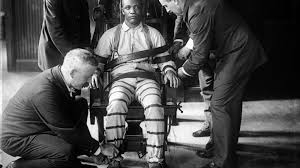
Case in point is, for example, the way the security of banks in central American countries (among that of other continents, surely) is maintained through the ostensible presence of (heavily) armed guards, instead of through cameras; but the appeal here is to the individual’s sense, first and foremost, of her own bodily integrity that in no way plays on the fear of a third party sense of collective appropriateness. Here the flesh in question and up on the potential chopping block, as it were, is indeed directly your flesh, there can be no doubt about that! But, once again and is in the case of the original country gentleman and the original Fa’afine of Samoa, it is the reinforcement of bodily experience, not its displacement, that seems to go against the grain of supposedly higher, technologically advanced civilized experience. However, the basic rule remains: that to value the bodily experience of others, one must embrace one’s own bodily entity; but this is the source of a particular kind of specific, technologically-advanced cruelty that, although ever present in culture in general (because indeed culture is and has always been in itself a movement away from the strictly corporal), is perhaps one of the hallmarks of post-industrial human experience (an idea constituting the foundation of the thinking of someone like, for instance, Foucault.)


















 …
…



















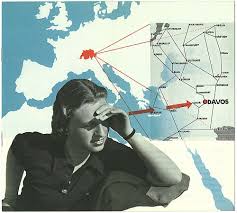


















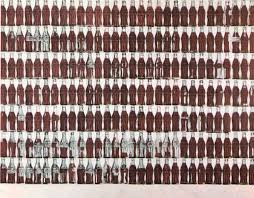

 (Struth)




 (Cirio)






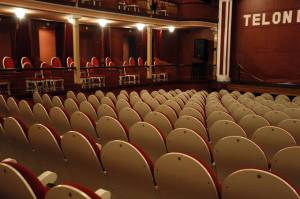















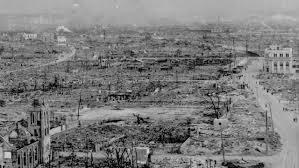









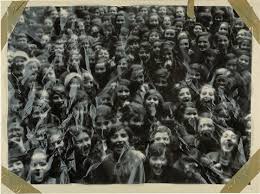 (Boltanski)









 (o la ‘intersubjetividad’)







































































 Physiological Man