Pero, ¿qué penumbra es ésa?

…Entre una noticia y otra los seres humanos viven en la penumbra. Esta picadora de carne mediática produce esencialmente dos fenómenos: la pérdida de la relación humana con el mundo y la impresión de poder conocerlo y juzgarlo por completo. Por esto último se interesan los filósofos, pero en lo que concierne a lo primero, también vale la pena molestar a los artistas. Quien coja papel y lápiz o se siente con los dedos ante un teclado para contar una historia tiene la oportunidad de regresar a ese barrio para encender una luz más tenue. Una vela que permita iluminar a las personas y las cosas sin deslumbrarlas, confundirlas ni pintarlas como demonios.Tiene la oportunidad de recoser la escandalosa muerte de Davidea su vida de chico joven. Mostrándonoslo tal cual era en vida y lo mucho que se parecía a todos los demás adolescentes del planeta. Tanto a los ricos como a los pobres. A los extranjeros que huyen y a nuestros conciudadanos que les cierran puertas y puertos…Ascanio Celestini, La picadura de carne mediática* en El País, 17 de mayo del 2019

Digamos que penumbra se define -vamos a decir inicialmente- frente a su negación que sería el estado fisiológico precisamente no penumbra, esto es, el estar nuestro que consiste en la efervescencia metabólica y emocional a partir del estímulo externo (tanto espacial como totémico-cognitivo). Y como ya llevamos diciendo, los contextos sedentarios, debido a la restricción respecto el desplazamiento físico que imponen sobre los sujetos antropológicos, arraigan su basamento funcional en la «moralización» de la vida corporal y fisiológica, como fuente principal de tonificación fisiosensoria (puesto que no hay cauce de desplazamiento directamente físico) y llave, por tanto, de la reconstitución sociorracional posterior. Y así, la penumbra que aquí traemos a colación se refiere, más específicamente, a una fisiología no estimulada que carece, por tanto, de la necesidad misma de que se sociorracionalice; con lo que cualquier apreciación semiótica posible desde la óptica de los otros, esto es, «la voz» que dé cuenta racional (al menos según un colectivo humano determinado), no llega a tomar forma puesto que falta el ímpetu fisioopróbico inicial respecto el porqué de esa misma racionalización social posterior; porque en efecto, si no me amenaza me propia sensorialidad con ponerme fuera de los límites de lo que es apropiado para el grupo humano al que pertenezco, no se hace necesaria la reconstitución sociorracional.

Penumbra, entonces y en el contexto conceptual de Celestini (y su traductor del italiano al español), adquiere tintes de lo no comprensible precisamente porque carece de la experiencia fisiomoral que es la causa estructural de que se genere -de que emerja socioopróbicamente– la comprensión socio-semiótica (tanto conceptual, o solo simplemente simbólica) que los contextos sedentarios requieren para estructuralmente  acomodar nuestra esencia fisiológico-sensoria originalmente nómada. O sea, el aburrimiento, parece sugerir, puede llegar a ser un problema verdaderamente estructural por cuanto apunta hacia la languidez, posible disolución, de lo sociorracional en sí.

Salvo que Ud sea artista: entonces, dice -o parece afirmar- Celestini, uno tiene la posibilidad individual de jugar con su propia experiencia sensoria dándole atisbos de sentido lógico (en el mismo ímpetu totémico de la proyección fisiorracional individual) sin que esto acarree necesariamente consecuencias político-corporales, puesto que se trata de impulsos y actos artísticos que se entienden inicialmente como ficciones que, mientras pueden connotar contenidos morales (incluso cuando se hacen de forma pública) no pretenden desafiar el sentido colectivo y consabido de lo real. Esto es, si es Ud artista —o simplemente  que tiene grandes dotes de creatividad que se dice— puede llegar por sí mismo a planos sociomorales, sociorracionales, de forma autónoma, porque vive con mayor capacidad soberana y de agente la sustancia fisiológico-sensoria de su propia existencia personal; pero respecto de las personas que tienen menos recursos (basicamente culturales, en origen, o humanistas -eso que es la apreciación estética de algún tipo de «belleza», en general-) están más sujetos a los pasos obligados y previsibles que marca la mecánica de los grupos humanos sedentarios, dentro de la situación en suspense que a la larga suponen los ciclos perennes de incesante estímulo ⁄ descanso, efervescencia metabólico-emocional ⁄ resconstitución y amparo (socio)racional en el tiempo sucesivo de las generaciones humanas sedentarias.

Pero ojo: aunque la capacidad creativa de imposición fisiorracional es patrimonio verdaderamente neural de todo ser humano vivo, el equilibrio sistémico en el tiempo antropológico requiere que se concrete, se limite y en buena medida se homogeneice según el grupo humano histórico particular; a partir de esa estabilidad en agregado respecto el mínimo común, la variedad humana naturalmente desembocará en divisiones intragrupales, y puesto que la individualidad antropológica que es en realidad colectiva, se basa también en el hecho de que cada cuerpo singular no tiene más remedio que definirse en parte frente a sus mismos compañeros de grupo. De manera que, mientras haya una necesidad estructural de las fuerzas prometeicas (porque la expansión infatigable de la curiosidad humana fuerza a cada paso al grupo acomodar dicha fuerza), la estabilidad antropológica, sin embargo, día sí y otro también, se debe a la otra parte contraria que, siguiendo lo que es solo un ejemplo de solo una posible codificación conceptual, sería algo así como lo apolíneo.

Y otro tanto: porque la complejidad de la vida humana socioestructural nos aboca al problema técnico de que es necesario que muchas personas (lo grueso de la población y la estabilidad que eso aporta) vivan precisamente sensorialmente encadenados a lo que solo supone el espectáculo de las sombras sobre la pared de una cueva proyectadas por otros. De hecho, la estabilidad sedentaria depende de esas cadenas. O mejor dicho: todos encadenados estamos a nuestra propia sensorialidad individual, mas solo una parte mínima, en principio, del conjunto puede llegar a percatarse de ello; y la contribución estructural que realizan entonces estos, es vigorizar la otra parte más complaciente, sin que en rigor se pueda nunca decantar por una de ellas sobre la otra. Fíjese: ¡Esto supone un grado de complicación de análisis, desde luego estructural, al que no había llegado el mismísimo Platón dichoso!

La picadora de carne mediática (El País)

La antropología de la contingencia (que te lo pide el cuerpo)

Vas al aeropuerto. Te diriges al área de check-in. Te piden una identificación y te emiten la tarjeta de embarque. Te diriges a las puertas y te encuentras con el control de seguridad. Te piden el pasaporte y el pase de abordar. Después de que pasan tus cosas por el escáner, te pones el cinturón, los zapatos, la chaqueta, guardas la computadora y el celular. Llegas a migraciones: necesitas enseñar el pasaporte y la tarjeta de embarque. Ya falta poco. Te diriges a las puertas, pero antes hay un último oficial que te pide… ¿adivina qué? Tu documento y el pase de abordar. Luego esperas pacientemente a que inicie el abordaje de tu vuelo. “Vamos a abordar por grupos, por favor tengan a la mano su pasaporte…y su pase de abordar”. 

Algunos servicios son ineficientes por diseño porque fueron concebidos para hacer la vida más fácil al proveedor del servicio, no al consumidor. El caso de los aeropuertos es un buen ejemplo. El área de seguridad quiere confirmar que eres un pasajero. El área de migraciones de un gobierno necesita saber que estás saliendo del país. La aerolínea necesita saber que eres tú el titular del boleto. ¿No podrían hacerlo solo una vez y compartir la información entre ellos?… Arturo Muente, en El País, 7 de agosto, 2019

(Los pintores de horizontes fisiológicos)

Las quejas del articulista respecto una mayor eficiencia burocrática han de enfocarse también en un contexto fisioantropológico que está fuertemente ceñido por los límites espaciales, esos que son concurrentes simplemente a la experiencia sedentaria basada en la agricultura. Pero intentaremos en este análisis elevarnos un poco más por encima de la sorna ideológica (bien justificada, por otra parte) que puede que aflore en nosotros cuando por ejemplo entendemos, efectivamente, que para que la industria mundial de las armas pueda sostenerse en el tiempo y al amparo finalmente de todo gobierno serio (puesto que los intereses socioeconómicos no se pueden desdeñar) tiene que existir el temor que solo una amenaza real y más o menos creíble pueda garantizar: si no hay pulsión moral atemorizada, no hay tensión finalmente financiera, así de sencillo.

Pues esto mismo se tiene que poder identificar respecto múltiples ámbitos de nuestra experiencia antropológica y, sobre todo, respecto al cómo vemos el mundo, que como se verá, sigue necesitando el temor de un contexto ambiguo, poco claro -y hasta ambivalente- para que tomemos en serio, por decirlo de alguna manera, la vida misma, y más concretamente lo que supone en el fondo (como base en realidad de todo) la suerte anticipada de nuestro cuerpo frente a lo desconocido. Pues algo así es el mecanismo supremo fisológico-moral de la experiencia sedentaria y sin el cual la sociorracionalidad grupal no se justificaría (y dado que ésta tiene que brotar necesariamente del estímulo sensorial y efervescencia metabólica del individuo sintienete quien, claro está, no es tal sino en el locus propio de la pertenencia grupal, fin para el cual está configurada en realidad nuestra naturaleza fisiocorpórea).

Esto es, que sin pulsión sensorial del individuo dentro del espacio colectivo de su propia pertnencia grupal, no hay posibilidad de no solo lo moral, sino que tampoco podemos hablar de lo racional. Así de sencillo.

Compárese en este sentido la vida nómada, en la medida que nos lo permita la imaginación, experiencia que podemos suponer deriva hacia una suerte de sostenimiento en la fisiología misma del andar; pero lógicamente la pertenencia grupal en tal contexto tiene mucho más que ver con el espacio físico de un grupo que se desplaza, lo que plantea al individuo el problema directamente físico de no caer rezagado respecto al resto. He aquí el punto bisagra entre los dos tipos de antropología, siendo la sedentaria la que está obligada, como se ve, a aprovecharse más de ámbitos más fisiológicos (el lenguaje, la proyección simbólico-semiótica, etc.) que en realidad físicos, puesto que la misma efervescencia fisiometabólica como requisito causal de la reconstitición opróbico-moral y racional, no viene normalmente y de forma continuada para nosotros los agrícolas de solo la experiencia del movimiento exclusivamente corporal.

Es más, la experiencia sedentaria ha de compensarse sobre precisamente este punto, en tanto que el hábito natural nuestro -en el sentido de la evolución biológica humana- ya no existe como experiencia corporal (o no al menos de la misma forma y dado que las fuerzas de selección natural efectivas son pocas), lo que deja solo la experiencia fisiológico-sensorial como el recurso y salida principal a explotar. Y, efectivamente, el cuerpo en sí queda relegado a una especie de estado auxiliar y como si dijéramos en standby (eso, poco más o menos, es el planteamiento de Agamben en Homo Sacer respecto de una inclusión que supone la expulsión), pues a partir de la agricultura vivimos en verdad más en un plano de nuestra propia proyección fisiológico-semiótica, en la efervescencia del un estímulo metabólico que es al mismo tiempo una suerte de interpelación moral respecto del grupo sobre el que de hecho se ha fundado universalmente toda cultura humana sedentaria, pero en el tejido nervioso de cada uno.

Y parece que, a unos pasos detrás del imperio fisiológico en el que se erige toda cultura y colectivo humano, sigue  después el cuerpo físico viviente, pero también necesariamente inerte, de alguna manera.

Ejercicios fisiocorporales con el demiurgo

Y es que a partir de un estado corporal que se erige en repuesta solo fisiológica ante los embates estructurales de una experiencia social del riesgo (o sea, la insinuación e implicación lógica constante del mismo, esto del riesgo y la amenaza potencial que se cierne sobre nosotros en nuestros quehaceres incluso más mundanos), se puede acceder, como si dijéramos, a un ámbito más elevado de lo que constituye una forma inherente en nosotros de antropomorfismo: en efecto, vamos creando -y nutriéndonos finalmente- de la ilusión de una agencia intencional exterior a nosotros mismos y del que somos objeto.

Nuestra percepción de cualquier tipo de agencia causal (el sol, el viento, etc) desde incluso niño nos aboca a procesos de imposición antropomórfica sobre el mundo que observamos como parte poderosísima de nuestra sensorialidad y los procesos fisiorracionales que alimenta. En este sentido, el trabajo de Piaget apunta a nuestra necesidad de entender el mundo en función de la presencia humana y puesto que ésa sería, a nivel simplemente corporal, nuestra prioridad absoluta (idea de Stewart Elliot Guthrie en Faces in the Clounds: A New Theory of Religion (1993)); esto es, no hay nada más relevante para nostoros que la presencia o no de otro ser humano y un mundo finalmente social, de manera que llevamos en nuestra esencia incluso neural una suerte de atención en el fondo moral respecto de la presencia humana externa a nosotros, y esto seguramente porque nos jugamos tanto en cuanto a nuestro propio desamparo corporal singular (esto que es lo esencial del concepto de oprobio biológico).

Pues bien, la experiencias social de una amenaza que se cierne sobre nosotros que podemos conocer en los dispositivos y rutinas de seguridad, como describe el articulo citado, o también mediante las implicaciones lógicas, por ejemplo, de la contemplación permanente del chaleco antibalas de todo oficial de policía que veamos en cualquier situación y contexto diario, nos aboca a procesos de imposición antropomorfa que rápidamente tienden a adueñarse de, no solo nuestro forma de pensar, sino en realidad de nuestra vitalidad digamos neural y preconsciente, de tal manera que es muchas veces inevitable que en alguna medida y distintos grados vayamos suponiendo la existencia de una fuerza siempre nebulosa externa y de alguna manera enfrentada a nosotros: los terroristas, el gobierno, las corporaciones, la banca, el Pentágano y la CIA; los narcotraficantes y grupos mafiosos de toda etnia particular o profesional; los pedofilos y traficantes de mujeres o de personas en general, etc; o ese ellos como sujeto de tercera persona del plural -agente por excelencia- que, como muletilla conceptual, no concretamos nunca: esta predisposición fisiorracional en nosotros acaba por crear, en distintos grados de credibilidad -pero raramente de manera totalmente fehaciente- una repuesta humana a todos luces normal e inherente a nuestra propia corporalidad filogenéticamente evolucionada y respecto, evidentemente, los contextos colectivos anteriores (esto que trato de decir está en el famoso texto de, por ejemplo, Hofstader de 1964, The Paranoid Style in American Politics; y para la cuestión de la evolución véase Konrad Lorenz, por ejemplo, en Sobre la agresión.)

En efecto, desde la experiencia solo fisiológica de nuestra sensorialidad (pero que es moralmente sensible en en este sentido corporal) construimos inferencias ya lógicas, o dentro del ámbito de nuestra racionalidad consciente, respecto a una realidad no necesariamente observada (¿cómo podemos tener constancia fehaciente de, por ejemplo, la existencia real y concreta de los hombres de negro financieros como poder fáctico real del mundo?) sino solo sensorialmente sugerida a partir de la circunstancia primigenia humana de, simplemente, nuestra corporalidad individual y la vulnerabilidad que supone esta limitación-definición física. Y sin duda, dado que nuestra naturaleza antropomorfizante es algo que no podemos ni evitar ni en realidad siquiera controlar (aunque sí entender y dominar bastante, pero no respecto el origen de nuestros instintos), cabe naturalmente que se nos manipule precisamente sobre este punto.

Y también crucial, respecto al asunto que ahora nos ocupa, es la importancia de por qué esto nos puede beneficiar frente al problema central (que ya llevamos repetidamente señalado a lo largo de estas páginas) que es esto de la crisis fisiológica que supone la aparición de la agricultura: pues en mi natural imposición antropomorfa sobre toda situación que, por ambigua me permite hacerlo dentro de los limites de lo racional que, no obstante, no llega a explicitarse, paso de mi corporalidad sensorial al demiurgo proyectado (llamémoslo así como en realidad siempre se ha hecho) para beneficiarme, precisamente, en mi propia entidad individual ahora devuelta, digamos, por mi propia postulación fisiorracional en la que puedo, aunque solo sea en realidad fisiológica y fisiototémicamente, recrearme a mí mismo en mi propia vivificación fisiosensoria.

¡Sé, efectivamente, que soy yo, o al menos de forma visceral y en todo tejido de mí cuerpo puesto que me encuentro finalmente ante otro, aunque lo haya tendido que postular yo, pues mi cuerpo, de entrada, no tiene por qué entender concepto alguno!

Y la cosa es que esto quizá no sería necesario si pudiera, por ejemplo, simplemente echar a andar, junto a mi grupo de pertenencia, en búsqueda física del siguiente racimo de moras, los raíces o los tubérculos que llevar a la boca.

_________________________________________________________

Stewart Elliot Guthrie, Faces in the Clouds: A New Theory of Religion, Oxford University Press, 1993

Casuísticas de un «oprobio biológico»:

El cuerpo propio y los cuartos que te juegas

Imagen de Kinsasa en los años 70

Somos ciegos. En una región cualquiera de África, Medio Oriente o Asia desfilan ante nosotros cientos de códigos y avisos que no podemos ver. Cualquier analista, activista, trabajador humanitario o —sobre todo y por la parte que me toca— periodista debería tenerlo en mente cada vez que visite alguno de estos lugares: somos ciegos. (“Ensayo sobre la ceguera”, artículo de Nacho Carretero en Jotdown.es, agosto, 2019; la imagen corresponde también al mismo artículo y cuya propiedad se atribuye originalmente a Getty. )

El cuerpo humano perdura, evolutivamente hablando, porque se hace miembro de un grupo; o mejor dicho, el aparato neural-fisiológico de cada uno de nosotros nos aboca a un proceso inexorable de consolidación sociorracional y de personalidad propia al que solo un grupo puede obligar, y mediante la otrora imperativa de supervivencia en un tiempo finalmente solo numérico de las especies vivas que, desde exclusivamente la óptica de la picota darwinista de la existencia, están efectivamente en una huida hacia delante, en cierta forma siempre más cuantitativa que en realidad cualitativa.

Parece que el tema está ya bastante bien esbozado y documentado -en el trabajo de A. Damasio, sin ir más lejos- respecto de una obligada preconfiguración neurológica y somatosensorial que garantiza que al final y en principio, la fisiología individual esté efectivamente a la merced de la situación en realidad más importante que es, simplemente, la permanencia del grupo en el espacio temporal. Claro que como producto de esta situación surge la moralidad humana y su hermana casi gemela, la sociorracionalidad necesariamente cultural, pues es la fisiología individual (la anomia en el plano estructural) lo que el grupo somete a su propia y vigorizada permanencia frente a las amenazas externas y que toma la forma ni más ni menos que de la individualidad ya emergida sociorracional, pues toda singularidad somatosensoria dentro de un mismo locus antropológico de pertenencia queda imbricada en el conjunto numérico mayor mediante su propia individualidad social, como auténtica mediación somatosensorial y metabólica, de lo estructural a través del cuerpo singular y su fisiología. Y así, la anomia de la singularidad físico-fisiológica deviene en fuerza y fondo causal de la unión numérica y sociorracional mayor:

La sociorracionaldad cultural es:

          la anomia somatosensoria individual 

                    + vivificación sensorial-metabólica 

                                      +  el locus colectivo de la pertenencia

De manera que se ha efectuado un proceso de homogenización fisiológica que supone también una fisiología individual hecha de alguna manera extrínseca, y al calor de la contingencia que obliga una y otra vez a la reconstitución sociorracional precisamente como resultado de cualquier tipo de precariedad respecto del grupo y su permanencia en el tiempo. Pero entiéndase esto en el sentido de que buena parte de nuestra naturaleza vital se basa en la insumisión, pues no de otra manera puede mantenerse este equlibrio aquí descrito entre homogenización colectiva, por una parte, y la anomia fisiológica y somatosensorial de cada uno que justifica precisamente que dicha tendencia homogeneizadora sea necesaria, puesto que la unidad de todo grupo humano no tiene lugar un sentido físico lato.

Necesario también es recalar que contingencia tiene el sentido más amplio de todo acontecimiento que los seres humanos seamos capaces de percibir, sobre todo ocularmente, pero incluyendo también sucesos internos al individuo mismo; acontecimientos que constan, en fin, de reacciones somatosensoriales de tipo emocional y cognitivos que solo el individuo corporal experimenta, y no de forma siempre consciente incluso también respecto estímulos internos (imágenes mentales del pensamiento propio, no externo.)

…El ojo blanco deambula viendo paseantes negros o árabes, viendo ciudades o pueblos, viendo saludos entre vecinos, clases sociales, mujeres y hombres, pobres y adinerados. Pero no ve el enredo de hilos y conexiones que hay detrás, no ve quién conecta con quién. Para los autóctonos es evidente, salta a la vista la estructura social. Para el visitante es como caminar por Las Vegas con una venda en los ojos. No existe nada más que lo que traslada desde su esquema mental. Es lógico. No se ve lo que no se concibe…(N. Carratero)

He aquí que la argamasa viviente que pudiera articular los grupos humanos de esta manera aquí esbozada y sobre la que se asentaría tal mecánica de lo sociorracional así reconstituida de forma recurrente sobre la sustancia de nuestra estar fisiológico y metabólico-sensorial, no puede ser sino el cuerpo individual y su sensorialidad (junto, claro está, con el aparato neurológico en un sentido damasiano): esto en su conjunto que llamo yo la fisiocorporeidad  anterior a nuestro ser social, que corresponde a un ámbito exclusivo de la efervescencia sensorial de toda percepción -como qualia– y justo antes de la emergencia de todo yo consciente socialmente forjada. Y al cuerpo solo es, en un sentido socialmente trascendente, respecto una imagen de su propio estado opróbico1, esto es, el cuerpo singular frente a, encarado con, los demás y de cuya presencia no podemos en ningún caso prescindir: he aquí el origen en realidad sensorial de la moralidad humana que es, ante todo e inicialmente, una imagen de nuestra potencial y agonizante exclusión; un ente de tal manera fisiológico por cuanto imagen ante la cual quedamos momentáneamente sujetos, que se puede decir que forma una suerte de extensión corporal, más allá de esto que somos en carne y hueso.

Del origen biológico no cabe duda, puesto que este fenómeno del oprobio tal y como llevo yo manejándolo, es algo observable en otras muchas especies vivas (si no todas ellas de una o otra manera), y que está presente de forma evidentemente no racional, esto es, anterior, por tanto, a todo desarrollo cerebral más complejo. Pero respecto de los seres humanos concretamente, no cabe duda que es ante todo una suerte de imagen mental que surte un poderoso efecto sobre nuestro organismo, respecto particularmente lo que debe ser esto del aparato neurológico presconsciente damasiano. En este sentido, la suceptibiliad del ojo humano hacia el antropomorfismo respecto de imágenes sociooprobicamente relevantes (las caras humanoides, o el manierismo corporal; conjuntos de objetos uniformes que pueden percibirse en forma de grupo; percepción de la fuerza física poderosa frente a lo minúsculo y débil; la captación ocular de relaciones socioafectivas, etc…) supone el germen mismo de lo moral a partir de nuestro afán fisiocorpóreo y obsesivo -de parte de un cuerpo en esencia desamparado en su misma singularidad- por reconocer, tener constancia de, el grupo y el amparo, finalmente corporal y pertenciente, que brindan.

Pero decir que algo es biológico no es lo mismo que decir que está genéticamente determinado. Y así, muy probablemente como el lenguaje, el oprobio biológico es una capacidad que está genéticamente programada pero cuyo desarrollo vivo -a igual exactamente que la adquisición del idioma nativo- depende de la inmersión social y afectiva, respecto de un cuerpo singular y su metabolismo sensorial. Y la personalidad humana es pues la historia de un cuerpo singular única, pero que se forja en realiad fisiocorporalmente respecto un grupo cuya importancia, además de su presencia física en algun momento, es sobre todo en un plano fisiometabólico que, como llevo desorrallando aquí en este texto específico y lo largo de conjunto mayor de estos escritos, una experiencia fisiológica no del todo consciente (o sea que es neurológicamente anterior) pero que es ya de por sí moral, respecto de la pertenencia o no del individuo, y al menos la tensión imperiosa en este sentido que está en forma, no obstante, de qualie, esto es, pura efeversencia solo sensorial y metabólica.

…Las fronteras son efectos ópticos. Otra vez nuestros ojos occidentales engañados. Para un fulani del norte de Nigeria poco significa la frontera con Níger. Al otro lado hay más fulanis. Que un francés y un británico, hace cien años, cogieran un lápiz y trazaran por ahí una línea como quien reparte una tarta nada significa para la etnia y los clanes que allí habitan desde hace siglos. La línea trazada a lápiz la vemos el resto de europeos, pero no vemos la frontera verdadera, la invisible, la que separa a los fulani, por ejemplo, de los kanuri…(N. Carratero)

De manera que todo cuerpo singular, a partir de un estar fisiocorpóreo, se constituye en ser social -que es también moral, también racional- solo por medio de su imbricación con el grupo, vínculo que supone ni más ni menos que buena parte de la personalidad en sí. Pero, el lazo mayor y base de todo no deja de ser nunca la anomia a nivel estructural que supone la singularidad fisiológico-sensoria de cada uno en lo particular: la homogenización opróbica de la que dependen la permanencia de grupos humanos, por tanto, se debe a, se reconstituye y se refuerza en, la esencial insumisión de todo cuerpo singular y su fisiología; y es esta precariedad inicial -o sea, la dispar singularidad física viviente de cada uno en su propia vivificación sensorio-metabólica- que no puede faltar nunca, a pesar de que el lujo de la cultura humana -paradoja suprema- se asienta sobre, precisamente, la utilidad estable de cierto grado de uniformidad fisiológica entre las partes del conjunto, mas non troppo.

Por otra parte, se observa una clara articulación causal entre el ser sociorracional de un grupo étinico particular, respecto su cotidianidad fisiocorpórea específica en la que está inmerso todo individuo perteneciente (incluyendo claro está el cauce fisiológico-semiótico particular que es su idioma), frente a otros grupos ajenos rivales, o que participan de alguna clase de oposición entre sí: pues gracias al otro rival que es el grupo ajeno y diferente, el pertenecer propio al grupo propio, adquiere mayor enjundia vital, sin duda. Y esto de tal manera que el conflicto intergrupal de baja intensidad (o al menos respecto una violencia abiertamente corporal que ocurre solo muy de vez en cuando) sirve de cierto animado estímulo frente a la limitación física de toda antropología más o menos sedentaria, erigiéndose finalmente en una especie de lujo de la misma, en cuanto el poder del estímulo fisiológico para disipar la constricción del mundo solo físico-espacial, y quizá como sempiterna problema nuestro, o por lo menos después de la agricultura.

Pero sea como fuere, es posible preguntarnos ahora por otro aspecto de libertad humana, respecto de los múltiples grupos a los que uno puede pertenecer si en su experiencia corporal -o por lo menos somatosenorial- uno se presta a ellos. Pues así muy bien podríamos definir la experiencia probablemente universal, de una forma o otra, de múltiples lealtades viscerales que el ser humano de hecho puede sentir (respecto la etnia propia frente a la nación; o sentimiento nación que no excluye diferentes identidades sociales o políticas, etc.) O más aún estas otras preguntas: ¿es posible deberse como individuo a varios grupos antorpológicos en este sentido opróbico? Y también ¿puede una persona, después de llegar a la edad adulta, incorporarse a un grupo nuevo que no sea de origen el suyo?

La respuesta está en el juego del cuerpo dentro de un nuevo entorno (que supone, por cierto, siempre una fisiología nueva); y con el cambio geográfico viene posiblemente y consustancial a ello el cambio del entorno social. Y si pudiera ser que nuestros cuerpos todos dependiéramos de, por ejemplo, las mismas fuentes de alimentos -tanto para los recién llegados como la mayoría que estaba ya ahí- podemos suponer sin duda que la lógica sociorracional no tardaría mucho en hacerse evidente para todos, puesto que se trata simplemente de un locus de la pertenencia sobre la que, aquí se ve, se sustenta la vida biológica humana. Pero eso como base en el fondo subyacente de todo, porque en seguida se inicia -otra vez- el juego del poder finalmente político que supone simplemente la presencia en sí del grupo (y su posibilidad agregada de estabilidad diacrónica como lujo finalmente técnico-económico): la suerte de las minorías nunca puede, de hecho, considerase firme en ningún caso.

Y aun así, dejándose el cuerpo propio sobre la mesa social de un nuevo entorno, sí que se llega, en un tiempo bastante corto, a poder concebir -y por tanto ver, por tanto valorar- los entresijos humanos y morales de la experiencia social nueva. Esto es, solo si se juega uno los cuartos arriesgando el único aval que para ello tiene: el cuerpo propio y su aparato somatosenorial sobre el que se articula. Pues ahí, en ese estar sensorial y metabóolico de un cuerpo frente al espacio, ha residido siempre el yo social de cada uno de nosotros, que solo es cuando necesita ser, esto es, frente a los otros como parte de estructuras humanos-fsiológicas recurrentes y concatenadas que constituyen una posibilidad de amparo colectivo, y aunque se cimienta todo, no obstante, en el íntimo terror individual a la vez que universal de la pérdida anticipada de ese mismo amparo.

____________________________________

1El sentido que intento abarcar con el uso de este término en otro texto mío: La ficción humana más importante.

Artículo de N. Carretero en Jot Down

El yo «fisiológico» de los grupos humanos sedentarios (fragmento)

El origen somatosensorial del yo social emergente (o un estar que solo en el emerger se hace ser)

Esto es, un yo social que no es en rigor físico sino solo en un sentido auxiliar, siendo el yo social (y opróbicamente forjado a lo largo de una vida corporal singular) en realidad un yo más fisiológico que físico, puesto que los grupos humanos han de forzar la postergación en cierto sentido de lo particular (sin que sea esto en exceso) en pos de una consolidación más fisiológica como cauce para múltiples seres físicos diferentes que, sin embargo están sujetos sociohomeostáticamente por el mismo locus de pertenencia antropológica y comparten, por tanto, una misma sociorracionalidad lógica y cultural.

Y es que lo más significativamente fundado de la experiencia humana, la que en rigor significa por cuanto susceptible de entenderse y no solo experimentarse, proviene en realidad de un ámbito un tanto nebuloso de la fisiología opróbica y cultural -o sea, la sociorracionalidad y su semiótica- que, para erigirse como tal, ha de extrapolarse del mundo físico y corporal. Y esto es así porque en rigor aquello que pueda sopesarse como significativo solo puede serlo bajo el enfoque de una semiótica que por definición se aleja en seguida y siempre de lo puramente idiosincrático: el significar es algo así como la quintaesencia de lo comunal y que lo es, por tanto, también de lo incorpóreo (necesariamente); pero accedemos a la cultura, y en efecto a nuestro yo sociorracional, si bien no en cuerpo, sí en forma desde luego fisiológica.

Y así, nuestro yo racional en todo su plúmbea entidad cultural (por tanto ético, por tanto racional y capaz ciertamente de significarse por y para un universal social potencial de múltiples individuos, en múltiples lugares y, finalmente, tiempos diferentes), consta no obstante, de una efímera entidad mayormente fisiológica. Pero, como desde un punto de vista racional -esto es, desde el yo sociorracional ya descorporeizado– hablar de lo humano sin poder dar por sentado la existencia del cuerpo físico es simple y llanamente inconcebible, se pierde esta matiz en una quizá necesaria si bien equivocada confusión entre eso que siempre hemos conocido como cuerpo y mente. Dicha confusión es exactamente eso sobre el que teorizó Agamben, por ejemplo, en Homo Sacer; lo mismo Freud en tanto el concepto de  un malestar cultural, o Spengler respecto el desfase entre las ideas en las que vive el hombre civilizado (sobre todo urbano) y nuestra esencia fisiológico-corporal que, al parecer, no siempre nos puede seguir los pasos de la proyección fisiosemiótica en la que vivimos y que fundamenta el mundo contemporáneo en su desplazamiento alocado hacia el futuro…

Cuestiones fisiológicas-estructurales resumidas

1.Hannah Arendt: ¿De qué está hablando en el fondo la autora de Los hombres en Tiempos de oscuridad respecto de eso de que hay cosas más importantes que simplemente tener razón (me estoy refiriendo al capitulo primero de dicha obra y sus reflexiones sobre el escritor ilustrado alemán, Lessing)? ¿Puede ser eso una referencia al hecho de que la vida se tiene que poder valorar no solo desde un punto de vista ética, sino que esa otra parte anterior a todo concepto, de carácter fisiológico-corporal (neurológico y somatosensorial, finalmente) previo a toda posibilidad de significarse conceptualmente (aunque sí respecto quizá de una moralidad remota solo corporal y ante la pertenencia a no al grupo); esa parte que se tiene que poder abrazar en los seres humanos y a partir, claro está, de la autoasunción propia de parte de nosotros mismos, que no tiene, sin embargo, voz propia (porque no pertenece en todo rigor a la cultura semiótico-racional establecida, sino que crípticamente es el fundamento de la misma). O como en dice Antonio Machado en su poema Autorretrato, quinta estrofa:

Converso con el hombre que siempre va conmigo
—quien habla solo espera hablar a Dios un día—;
mi soliloquio es plática con este buen amigo
que me enseñó el secreto de la filantropía…

O sea, se trata en realidad de poder valorar la vida en su origen corporal y pre-social: creo que es eso de lo que están hablando -tanto Arendt como Machado- y que le cuesta mucho a toda cultura puesto que toda cultura (el universo mismo que supone su idioma, ética y valores) se asienta sobre la retención críptica de su cautivo estructural que es algo así como nuestro aparato neurológico ante consciente, que es en definitivo y siguiendo la idea de Agamben en Homo Sacer, el cuerpo desasociado y estructuralmente alienado para que podamos ser universalmente lo que somos en la unicidad colectiva específica de cada cultura y grupo humano histórico particular.

Y la cuestión ética suprema, entonces, sería ésa, que es el poder valorar lo que no posee ni el poder ni la dignidad de una voz en realidad propia, sino solo podemos contemplar a través de una experiencia visceral que difícilmente se presta a palabras, y lo que es aun más grave, que nos obliga a aceptar como dos planos de experiencia humana, pero ahora en un sentido técnico, más allá de todo encanto literario-filosófico de las paradojas. Porque es solo con esos dos planos que se puede proceder con la razón humana y una articulación conceptual de la situación. Porque de lo contrario, nos quedamos plantados como si del jardín de Wittgenstein se tratara, mudos pero no parados para nada, sino feroces como siempre.

3.Análisis del sustantivo del inglés «creep» como muletilla lingüística de sentido despectivo:

Su aplicación calificativa a otro ser humano supone el ahuecamiento tajante del objeto humano de toda interioridad, pues la definición de creep parte en realidad de la imagen del movimiento de insecto o reptil (solo ellos como seres animados pueden participar de esta acción como verbo, salvo que se quiera significar metafóricamente el movimiento humano ‘con sigilo’); ahuecamiento que me recuerda a Amazon como empresa que reduce todo a cajas que se hacen circular por ahí sin que importe ni mínimamente el contenido de cada una, o eso al menos desde el punto de vista de la impresa y su modelo empresarial; un proyecto que asombra con la plétora de diferentes artículos anhelados por los seres humanos de toda posible cultura y que pueden asociarse el logo tipo de la sonrisa tensada, siempre que el articulo real (ya no como imagen, sino objeto físico) quepa, eso sí, en forma y molde de paquete postal, de tamaño mediando, tirando como mucho a grande.

Pero queda la vivencia humana -la vida humana- que solo puede ser personal y que no tiene más remedio que interesarse por el contenido, pues ocupa un espacio físico único que no puede finalmente uniformizarse ni homogeneizarse más (que es el de un cuerpo físico finalmente irreductible); queda la vida, digo, desplazada a alguna clase de periferia técnica enmudecida mientras lo realmente importante es, cada vez más, la circulación de las cajas en sí; porque es una herramienta estructural que permite cierta clase de representación sugestionada de vida humana, al menos a partir de una vertiente de actividad que referencia (aunque de forma remota) el deseo e ímpetu fisiológicos humanos; y que, si bien constituye solo una referencia, solo una noción de vida, sirve, no obstante, para que los demás podamos agarrarnos al menos en nuestra propia experiencia fisiológico-vital (en nuestro propios deseos, proyecciones fisiosemióticas, y anhelos) a una suerte de certeza sentida y visceral de que la vida sigue como siempre, que de hecho es visceralmente cierto si hay suficiente ambigüedad estructural que impide cualquier clase de definición definitiva de aquello que podría estar pasando más allá de nuestra capacidad de percibir ni de concebir (lo que no excluye ni tampoco confirma, precisamente, la posibilidad de que efectivamente exista o esté ocurriendo otra cosa respecto un nivel macro humano y estructural).

Pero en todo caso, se trata de una ofuscación, y una confusión, de carácter técnico-instrumental que utiliza lo visceral de la percepción somatosensorial humana para postergar de alguna manera -dejando efectivamente en suspenso – el peso de cualquier objetividad confirmada, entonces inexorable: O como alguno de los dilemas chorra que nos hicieran de pequeños los primeros años de colegio, tipo ¿Qué pesa más, un kilo de plumas o un kilo de acero?, en el que la imagen mental sugestionada puede llegar a obviar el contenido conceptual (que es, por cierto, la estrategia base en general de los magos y el uso que hacen de los sentidos humanos, pero en aras, como no, de nuestro mayor, vivificado deleite metabólico-sensorial).

3.Sánchez Ferlosio, “Eisenhower y la moral ecuménica”(1980); párrafo final):

La territorialización y militarización de los antagonismos ideológicos universales arrastra, pues, hacia la inanición y el desfallecimiento a las propias ideologías presuntamente defendidas y ofuscadas en beneficio de las armas que dicen defenderlas. Toda militarización acaba por hacer desaparecer cualquier atisbo inicial de antagonismo realmente ideológico que hubiese podido haber alguna vez siquiera en forma de deseo sincero, y las ideas acaban perviviendo solamente en la siniestra función de coartadas morales de las armas, con la sola vigencia de insignias distintivas, marcas de fábrica, señuelos de enrolamiento y movilización. No fines, por tanto, de las armas, sino instrumentos al servicio de ellas y de sus únicos, innatos fines intrínsecos y propios: el éxtasis de la victoria, el placer del predominio, la ambición de hegemonía, el furor de la autoafirmación.

A igual que la caja vacía de Roland Barthes, como imagen e icono conceptual final de Imperio de los signos (1970) que contiene a su vez una caja más pequeña igualmente vacía, los pretextos racionales -que a menudo son precisamente situaciones enconadas de alguna clase de oposición- sirven, no obstante y pese a las contradicciones que puedan incurrir (caso de la guerra fría en la industria del armamento que menciona la cita de Ferlosio), para sostener la vida sedentaria, crucialmente por cuanto acaban siendo el mecanismo bisagra de la vivificación somatosensioral y metabólica, y por tanto también de la constitución sociorracional  posterior y recurrente que la efervescencia fisiológica reclama. De hecho, los contextos sedentarios agrícolas no serían viables sin fuentes de estímulo y vivificación somatosensorial para poder ejercitar una esencia fisiológica humana originada en -aun perteneciente a- un tiempo pretérito nómada y evolutivamente anterior.

Es en este sentido, por lo tanto, que no se puede razonar desde la óptica solo de a indignación moral, y por muy racionalmente justificada que estuviera (como en el caso de Ferlosio que lo está y con mucha precisión), sino que el camino técnico es sin duda la racionalización de nuestra entidad fisiológica, como la necesidad de tomarla en cuenta puesto que la sociorracionalidad de los grupos humanos (y los universos semióticos-culturales que la sociorracionalidad fundamenta), es estructuralmente un apéndice en sí misma de nuestra naturaleza fisiológica, como he intentado desarrollar a lo largo de este cúmulo de textos. Una comprensión pues racional de, en fin, simplemente nuestra condición humana, requiere que el lado visceral nuestro (empezando con lo neurológico) que en mucho tiene que ver con el algo así como el furor de la autoafirmación que dice Ferlosio, se conciba en toda su importancia, y no como una corrupción respecto de un plano moral al que, como ideal, no se ha logrado finalmente aproximar.

Esto es, el asunto técnico de la antropología sedentaria es la crisis fisiológica que supone para los seres humanos el paso de una vida nómada a la sedentaria, en la que el furor de la autoafirmación biológica ha de atenderse, de repente, de otra manera a través de la experiencia fisiológica encauzada semióticamente, puesto que no está ya disponible el otrora recurso de la vida en movimiento, más o menos constante (que no precisa, evidentemente, de tanto desarrollo cultural puesto que los contextos sociales obligados, cara a cara entre las personas que sí fundamenta la vida humana sedentaria basada en la agricultura, se disipan un tanto en el desplazamiento físico en sí).

En este sentido se hace preciso confrontar la cuestión ciertamente desagradable de los pretextos racionales como articulaciones finalmente estructurales dentro de una suerte de esqueleto lógico-semiótico que está, sin embargo, al servicio en realidad del furor de la auoafirmiación nuestro; esto es, como cauce para lo que supone la vivificacion somatosensorial y metabólico individual, empero sin que peligren la estabilidad y complacencia bases de la antropología sedentaria; o más bien que dicha estabilidad se beneficie precisamente de la vivificadora contingencia, de la que llega finalmente a depender estructuralmente, y en el tiempo de las sucesivas -a la vez que simultáneas- generaciones. Como también atrezzo lógico, sería otra manera metafórica de describirlo.

Y es que la cuestión de por qué la cultura humana universalmente se basa en un componente críptico que elude el escrutinio racional (cuestión que me ha motivado durante mucho años y como cuestión, en parte, detonadora de este cúmulo de textos), no tiene, al parecer, otra respuesta que ésta: la condición neurológica humana que le presta un carácter emergente (y por tanto también una calidad recurrente) a la conciencia humana en su perpetua reconstitución a lo largo de toda vida individual, también acaba por dictar esta forma de alienación técnica de la parte somatosensorial nuestra, frente al yo consciente socialmente configurado (por la fuerza opróbica individual). Pero el yo consciente social es, sobre todo, él que me sé que soy yo aunque no sé muy bien porqué, sino que, típicamente, hemos de referenciar a otros (linajes, lealtades, asociaciones simbólicas con otros grupos, etc.) de forma que nos puede parecer a veces hasta cómica respecto de lo que en realidad se despunta como quizá uno de los mayores horrores que revolotean por ahí, siempre un poco más allá de nuestro conocimiento -aunque sentimos visceralmente que está ahí, eso sí- y respecto la consiguiente inseguridad existencial adicional que esta aprehensión nos acarea: pues que da miedo la noción visceralmente sostenida, seguramente a lo largo de toda una vida -de toda vida- de una cierta calidad ahuecada que no logramos nunca quitarnos de encima del todo (¡aunque la verdad es que no es tampoco necesario, si en mi propia vivificación metabólica y sensorial me puedo volver a volcar!):

Un ahuecamiento que rellenamos, otra vez, con la efervescencia fisiológico-sensoria que se pretexta quizá en parte (una articulación social y colectiva, a largo plazo es, evidentemente, imprescindible), pero que en realidad se erige monumental de por sí, y porque sí, como el imperio que supone, no semiótico (el del Barthes, el de los signos) sino en realidad como poderío fisiológico, pura sustancia viva y anhelante a partir de un cuerpo permanentemente desamparado.

_________________________________

Veáse 9. Nuestra bastardía neural

“Cultural Empties” Meditation

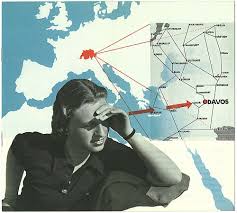
Semiotic Structure for Somatosensory Invigoration in Davos Anthropology Model


(Herbert Matter)


_________________________________________________________

DISCLAIMER The possible use of visual materials of others -individuals or companies- is not meant as an actual reference to any individuals or companies (or specifically those identifiable through said visual material) but rather as pieces of a communicational device and strategy at the service of other, usually more abstract and generalized ideas.


The Universalia of Anthropology

 Index:

Burkert and MacMullen

Biological Opprobrium and Sociorrational Constructs

Anthropomorphism

Defiance of Physical-spatial Reality

A somatosensory self: The Theoretical Accommodation of Biological Opprobrium in Damasio

[Freedberg]

[D’Andrade]


Burkert and MacMullen

Walter Burkert, Creation of the Sacred. Tracks of Biology in Early Religions, 1996

Ramsay MacMullen, Feelings in History. Ancient and Modern, 2003


Pars pro toto (Burkert)


“Life for life” (Burkert)


The Core of the Tale (the Quest) (Burkert)

The Initiation Tale: The Maiden´s Tragedy (Burkert)


Defiance of Geography (Implied in Burkert inferred by me!)


Hierarchy and the Awareness of Rank (Burkert)

Rituals of submission (impression of submission)

Strategy of praise

Submission to sovereignty

Two-tiered power

The Envoy


Assignation of cause to effects (Burkert) [fisorrationalimposition]

Designation of guilt

Explanatory biological models (fetters, Wrath, Pollution)


The use of the nonobvious as power ploy [and physio-semiotic atrezzo](Burkert)


Gift giving and the principal of reciprocity (Burkert)


Signs with which we construe cosmos of meaning which would seem to reaffirm god or how human beings use religion. (Burkert)[So how to explain absence of more formal use of “god” in more nomadic cultures: recourse to physical movement itself, which becomes possibly a form of resource which agriculture man does not have]


Shame

Pride

Guilt

Indignation-anger:(MacMullen) [the universalia of anthropology because they are the emotional pillars of the structure of human groups understood as something like a geometry in time, involving physio-corporeal singularity in collective circumstances of human need, versus the onslaught of the natural world and spatial reality.]


Deviance (Inferred from MacMullen)

[as the natural state and condition of needing the socially rational. And deviance also accounts structurally for physio-corporeal singularity; that is to say, all physical-physiological singularity is, from the standpoint of the group and its sociorrational functionality, a form of deviance; idiosyncrasy of individual that is, nevertheless, the source and sustenance of the opprobrium construct of sociorrationality and its permanent reconstitution in human-group time.]


Biological Opprobrium and Sociorrational Constructs in Bourdieu and Canetti


1

From Bourdieu,Distinction. A Social Critique of the Judgment of Taste (1984)

Originally published in 1979 as La Distinction: Critique sociale du jugement.


Pg.471

…The sense of limits implies forgetting the limits. One of the most im­portant effects of the correspondence between real divisions and practical principles of division, between social structures and mental structures, is undoubtedly the fact that primary experience of the social world is that of doxa, an adherence to relations of order which, because they structure inseparably both the real world and the thought world, are accepted as self-evident. Primary perception of the social world, far from being a sim­ple mechanical reflection, is always an act of cognition involving princi­ples of construction that are external to the constructed object grasped in its immediacy; but at the same time it is an act of miscognition, implying the most absolute form of recognition of the social order. Dominated agents, who assess the value of their position and their characteristics by applying a system of schemes of perception and appreciation which is the embodiment of the objective laws whereby their value is objectively con­stituted, tend to attribute to themselves what the distribution attributes to them, refusing what they are refused ( ‘That’s not for the likes of us’ ) , adjusting their expectations to their chances, defining themselves as the established order defines them, reproducing in their verdict on them­selves the verdict the economy pronounces on them, in a word, con­demning themselves to what is in any case their lot…


Pg.474

…so­cial necessity made second nature, turned into muscular patterns and bodily automatisms. Everything takes place as if the social conditionings linked to a social condition tended to inscribe the relation to the social world in a lasting, generalized relation to one’s own body, a way of bear­ing one’s body, presenting it to others, moving it, making space for it, which gives the body its social physiognomy. Bodily hexis, a basic di­mension of the sense of social orientation, is a practical way of experienc­ing and expressing one’s own sense of social value. One’s relationship to the social world and to one’s proper place in it is never more clearly ex­pressed than in the space and time one feels entitled to take from others; more precisely, in the space one claims with one’s body in physical space, through a bearing and gestures that are self-assured or reserved, expansive or constricted ( ‘presence’ or ‘insignificance’ ) and with one’s speech in time, through the interaction time one appropriates and the self-assured or aggressive, careless or unconscious way one appropriates it.12


2

 Elias Canetti, Crowds and Power.Continuum Publishing Corp., NY, 1981.

Published originally in German, in 1960.


Pg.20

…In the crowd the individual feels that he is transcending the limits of his own person. He has a sense of relief, for the distances are removed which used to throw him back on himself and shut him in. With the lifting of these burdens of distance he feels free; his freedom is the crossing of these boundaries….

__________________________________

The limits are his identity in a socially structural sense; but of course, anthropological group structure limits him exactly because there is more to him than only what the structural will see standardized—in fact, the very socially (or culturally) standardized part of him is crypticallybased itself on this other, bodily singular and vulnerable side to be subject to a collectively structural order of the mind, finally, as a specifically culturalform of rationality. Thus the culturally rational is functionally a form of containment of the other singularly body side, and so could not be in itself except for the force of challenge brought to it by the individual’s deeper physiological and physical entity. But the culturally-posited rationalis rational in its character of being commonly, collectively understood by all group members, above and beyond the only exclusively individual circumstances of bodily, physiological and individual physiologically rationalexperience; and so naturally there will be spheres of personal experience that are in fact not readily understood by the standard group-wide mode of knowingand even self-comprehension. That is to say, anthropology must to some extent alienate part of the individual’s bodily reality—through opprobrium mechanisms of culturally rational construct—to ensure group entity and cohesion, because human groups survive in their anthropology throughthe lives of individuals and in the very circumstances of individual mortality. It is thus against the constriction of the cultural self, in the sense here described, that the individual lives constantly in some form of opposition to, and that culturally structural stability is ultimately based on. Consequently, it can be no surprise that part of the individual, if incited and duly stimulated, would seek to follow through suddenly to the very end in regards to a tension she already permanently lives in, anyway, and under the boot of a particular anthropological order that is the force of her very culturally individual and subjectivity.

The existence of a rational subject is possible because of the anthropological subjection of a particular human group she is dependent on; her rational understanding is thus in this way a product of and key element to that process of geographic and culturally specific definition: anthropological subjection of the individual is the imposition of a group and culturally defined mode of individuality, human physiologically rationalpersonality then relates to on her own terms, so to speak, and to the extent that his possible. Thus, the necessary standardization of individual physiological response human groups require—to whatever degree and in whatever particular way—comes about through the conflict individual, physiologically rational personality brings to the group; the group, in this way is thus itself very much dependent on the individual for its own structural invigoration and state of being structurally alive and relevant.


The violence of the crowd in this context, then, is really the violence inherent to not being of the group in the very obvious way one cannot physically be something else—that is the very violence inherent to individuality itself that anthropologically can only be a collective individuality, and only cryptically buttressed by the deeper vital force of the bodily singular person. And so if it is the group that thus makes the individual structurally what she is, but at the expense of her own physical experience—or at least her understanding of it—the context of a group that has outgrown and destroyed the former group, is a form of individuality cut lose from its structural bearing—cut loose, in a sense from its self in its very structural mooring and identity, and so probably could not be anything else but euphorically violent, or also logically deeply terrified.


Pg.31

“Many of these footprints were in large numbers close together and, just be looking quietly at them, men, who themselves originally lived in small hordes, were made aware of the contrast between their own numbers and the enourmous numbers of some animal herds. They were always hungry and on the watch for game; and the more there was the better for them. But they also wanted to be more themselves. Man’s feeling for his own increase was always strong and is certainly not to be understood only as his urge for self-propagation. Man wanted to be more, then and there; the large numbers of the herd which they hunted blended in their feelings with their own numbers which they wished to be large…”

_____________________________________

Before man was able to read himself into his divinities(Bruno Snell), he read himself into what he saw in the world around him, especially in the animated figures of living animals; and the first step towards the exo-self understanding of his own entity and being, might well be posited first in his observation of the animals, as a direct way of knowing himself in what he sees he is not. But quite quickly, however, he would find himself obstructed from further development of his own self-understanding in the very foil and exo-self object he was relating to, in its obvious limitations that become an impossibility to a further knowing of himself; and so because such a greater, superior foil to which he could physio-totemically relate to was not available, he had to posit it himself, utilizing the unknown as in fact his canvass on which to paint what he could in regards to logical notions of something obviously quite superior to himself (for what else could explain his presence among the animals, but miserably alone in his superiority over them?) And so because from the animals—and nature itself—he got no answer, nor even a significantly purposed and intelligent response at all, he found himself in the need to create something superior to himself, not really in his own image, but rather in better and enhanced image of himself, so that historically and in terms of cultural evolution, he could actually become that superior being, or at least partially and to whom he initially related only totemically out of his own physiologically rational need to transcend in fact his own physiological experience (what is rationality in a cultural sense but a contrast to and containment—a transcending—of the physiological?) as a pillar of social order, of course, but perhaps also a form of relief from the repetition, redundancy and entrapment that is his only physiological substance of experience. Thus is the idea of transcendence, from this standpoint, a form of integration and embrace of the different components of the self (cultural, physical/physiological, and physiologically rational) that is the resource of meaning and its adscription specifically to the physiological, and that could be understood as a ‘saving of man from his physiological self’—by in fact imposing ultimately on him a conceptual understanding of himself, and to whatever degree of empirical accuracy (that does not necessarily have to be at all, but rather only anthropologically effective!)

And it is agriculture that would seem to propel human beings down the road of physiological transcendence (i.e. ‘into to a culturally-posited rationality and semiotics’), and at least certainly as an outlet for the very impetus of humanity’s own physiological nature that, in the contexts of sedentary experience proper, inexorably had to fictionalize itself through man’s hypostatization of his own physio-semiotic projection; through no other means, in fact, could sedentary human groups keep themselves together.


Pg.45

“The minds of the faithful are full of such images of invisible crowds. Whether these are the dead, or devils, or saints, they are imagined as large, concentrated hosts. It could be argued that religions begin with these invisible crowds. They may be differently grouped, and in each faith a different balance between them has developed. It would be both possible and fruitful to classify religions according to the way in which they manipulate their invisible crowds. Here the higher religions—by which I mean all those which have attained universal validity—exhibit a superior degree of certainty and clarity. These invisible hosts are kept alive by religious teaching. They are the life-blood of faith. The hopes and desire of men cling to them. When they fade, faith weakens and, whilst it dies slowly away, fresh hosts come to take the place of the faded.”

__________________________________

Because the individual must exist against a group; and so it is that I can only be as an individual in my own physical entity against even my own group (that is of course the only way I can really belong), but also must other groups oppose me (and surely at times my own group) so that I may existin that very opposition to what I know I am not; and the existence of those groups will I posit my self, if they are not readily available to my perception—and it is in exactly that which cannot be openly contradicted where I am in fact free to posit forces of existentially dialectic opposition to my myself, that is the only means by which I can in fact know what I am (once again and always in what I see/know I am not)


Avatars and modes of exo-self foils of human superiority:a warrior foil; a teacher and custodian foil;a love-hero foil…And always to these singular figures will some form of group also be associated, because what is ultimately the singular individual—whether real or in representational form—but a mode herself of relating in some way to a group?And in regards finally to divinities, it is obvious the group dialectically bound to the supreme divinities of human anthropology are none other than the living group itself who exist conceptuallythemselves in their physiologically totemic, physiologically rational union with it. How, then, could such divinities not be understood themselves as really cryptic models of human individuality itself, or at least a proposal of living tension and ordertowards that model?Divinities are both—and at times simultaneously—imitated and opposed, as really our own foundations of the conceptual as of the human subject conceptually awareof self. Thus, physiologically rational awareness of self becomes a culturally conceptual awareness and understandingof self.


Pg.54

“Everyone who falls by the way acts as a spur to the others. Fate has overtaken himand exempted them. He is a sacrifice offered to danger. However important he may have been to some of them as a companion in flight, by falling he becomes important to all of them. The sight of him gives new strength to the weary; he has proved weaker than they are; the danger was aimed at him and not at them. The isolation in which he remains behind, and in which they still see him for a short time, heightens for them the value of theirbeing together. Anyone who falls has thus an incalculable importance for the cohesion of the flight.”

_______________________________

Culture allows for collective physiological possibility in sedentary contexts: A semiotic architecture in which people live in physiological projection of themselves, becomes in this sense the trappings of the anthropologicaland the robes of civilization; another metaphor is the architectural canopy, rooftop and vault. The ideas and ideals human groups physio-totemically relate to become the structurally viable engagement of their very individual physiological entity, and are thus the sedentary equivalent to flight itself as direct, physical movement; but physiologically semiotic ideals are also effectively the antithesis of a nakedmisery and poverty of the strictly physical that is covered anthropologically in the cryptic quality of culture and its architecture of the physiologically realand fictional.


Anthropomorphism


Stewart Elliot Guthrie, Faces in the Clouds: A New Theory of Religion, Oxford University Press, 1993


Pg.89-90

“…the standard views of anthropomorphism, as we saw above, claim just the opposite: that anthropomorphism is oddly irrational and is based in confusion in wishful thinking, or in both. Once we see that anthropomorphism results from our most powerful model, we can see that we are bound to engage in it everywhere, not only inevitably but also reasonably. We can see that human traits such as symbolism might be anywhere and that the universe mightbe linguistic. Once we decide a perception is anthropomorphic, reason requires that we correct it; but that decision can come only in hindsight, when we have a different interpretation of some phenomenon we had thought humanlike.”


Pg.90

“Anthropomorphism, like other products of cognition, results not so much from a desire to find any particular pattern as from our more general need to find whatever pattern is most important. The most important pattern in most contexts is that with the highest organization. The highest organization we know is that of human thought and action. Therefore we typically scan the world with humanlike models.Scanning the world with humanlike models, we frequently suppose we find what we are looking for where in fact it does not exist.This is more apparent when we are most aware of ambiguities *a sound in the night, a shadow in our path, an unexpected death); but such cases are not aberrant. All perception is interpretive and all interpretation follows a pattern: we look first for what matters most.”


Pg.91

“Anthropomorphism as Perception”

“Nothing is so important to us as other humans. Because we are preoccupied with each other, we are sensitive to any possible human presence and have tolerant standards for detecting it. Most unconsciously, we fit the world first with diverse human like templates.1 Our preoccupation with human prototype guides perception in daily life.We attend to what fits the humanlike templates and temporarily ignore what does not.Sounds, shapes, and smells thus first evoke humans and we mistake mailboxes, signposts, and saplings for people. Evidence of anthropomorphism in perception, and reasons for it, come from:


-artificial intelligence,

-from psychoanalysis,

-from experimental, clinical, and developmental psychology,

-from ethnography.”


Pg.92

“However, as anthropomorphism is chased form one realm in springs up in another. If we no longer see the sun and moon as persons, we hear intelligent signals form space2. Unmasking instances of anthropomorphism, if we think this desirable (and most do), is like stamping out patches of a bigger fire because anthropomorphism stems form an effort broader than itself. Moreover, it is recognizable only in retrospect.”


Pg.92

-[paraphrased] Konrad Lorenz walking in a forest with his dog when they saw, in a distant clearing, an old man seated on a log. According to Lorenz, the dog clearly expected a social encounter; but when they came closer, the old man turned out to be a stump.


Pg.105

“However, since we also see faces in mountains, clouds, and automobiles, the ability to see faces in degraded or rudimentary images is not just a sensitivity to actual faces. Rather, it is a predisposition to see faces whether they are there or not.Our models of faces—whether acquired or innate—are powerful for good reason: “no other object in the visual world is quite so important to us”.56Consequently, face and other human schemata emerge early. Throughout life, they cause us to find human features everywhere we look.”


Pg.107

“That models of humans do take priority in perception also gets support from the projective tests of clinical psychologists. People largely interpret Rorschach ink blots, for example, as images of persons or parts of persons. Such interpretations predominate by age three, increase steadily for eight years, and remain predominant by age three, increase steadily for eight years, and remain predominant throughout life.73Interpretations of blots as certain nonhuman animals such as bats and butterflies are next in frequency.74These are followed by other animals and distantly by plants and inanimate objects. A recent cross-cultural study suggests that this predominance of humans in inkblot interpretations is universal.”75


Pg.110

“Animism and artificialism, which in Piaget’s usage together amount to anthropomorphism, thus are both spontaneous and pervasive in early childhood. They slowly diminish through childhood and, by early adolescence, children’s views approximate those of adults.”


“Piaget also underestimates the persistence of artificialism and the depth of its source. He appears to be correct in saying that children’s early experiences of their parents as a social world and of themselves as physical, manipulative agents, are principal sources of their human like models. However, he does not acknowledge, except in brief references to religion, that these models continue broadly into adult life. Their persistence suggests that something more sustains them than immature confusion…. What gives rise to them and sustains them, in my view, is the perceptual strategy described earlier, which has good reason to persist. An illusion—or failed or erroneous interpretation—does not necessarily mean that the perceptual guess leading to it is irrational.91 Apart form finding adults similar to children and emphazising strategy rather than confusion, however, my view does not conflict with Piaget’s. Rather, it builds on his description of the child’s world and on his location of the sources of anthropomorphic models in the experience of self and of others.”


Pg.120

“Even this brief ethnographic survey shows that people around the world see virtually everything, at one time or another, as significantly humanlike. One might object that concerns other than perception motivate some of the texts reported. One might argue, for instance, that anthropomorphism is not perceptual but conceptual, that it is a representation or secondary elaboration, and that it is motivated by aims other than simply seeing what is. To sustain this objection, however, one would have to draw a line between percepts and concepts. Such a line cannot be drawn because perception already is interpretation. It is a choice of one possibility from many, since sense data define nothing in particular. Perception draws data together with a template, a process already conceptual and representational. Hence the percept/concept distinction collapses. Even if such a distinction could be made, anthropomorphism would range across both sides of it….The pervasive anthropomorphism indicated by ethnography and folk literature doubtless has the same perceptual roots as that indicated y psychology. The research reviewed suggests these roots run deep. Work in artificial intelligence shows once more that perception is interpretation and that the highest-level interpretations are the most powerful and guide perception. Object-relations psychoanalysts and attachment theorists say we search innately for persons and for social relationships. Developmental psychologists show that children and even infants interpret phenomena as humanlike, as caused by humans, or both. Clinical and experimental psychologists, and ethnographers, show that adults do so as well. In sum, the research shows that a generalized anthropomorphism is spontaneous and primitive in children and persists in adults.”


Pg.122

“As with animism in art, one might object that anthropomorphism in art differs from naïve anthropomorphism in that it is calculated to exploit some tendency in its audience. Thus it is intentional and contrived, not spontaneous. However, although artists certainly calculate and manipulate, their representations still originate in the same unconscious perceptual process as in other people. As with animism, artists often deliberately use anthropomorphism, but first they experience it.”

_____________________________

Fantastic argument in favor of conceptual-theoretical use of “semiotics” or intersubjectivity; because it is the sensorial physiology that is in fact the underlying universal, here in question, and that which later is curtailed, limited and strategized by real human groups through time and in the particularsocio-rationalitythey come to be dependent on their own collective integrity (whether actually physical and/or physio-opprobically totemic).


Defiance of Physical-Spatial Reality


1.

“Nietzche on Truth and Lying” in Friedrich Nietzsche on Rehtoric and Language. Oxford Univ. Press, 1989

(…)The intellect, as a means of preserving the individual, develops its main powers in dissimulation; for this is the means by which the weaker, less robust individuals survive, since in the struggle for existence they are denied the horns and the sharp teeth of beasts of prey.

This art of dissimulation reaches its peak in man; here deception, flattery, lying and cheating, slander, false pretenses, living on borrowed glory, masquerading, conventions of concealment, playacting before others and before oneself, in sum, the constant fluttering about the flame of vanity, is so much the rule and the law that almost nothing is more incomprehensible than how an honest and pure desire for truth could arise among men. They are deeply immersed in delusions and phantasmagoria; their eye merely glides around the surface of things and sees “forms”; their perception leads nowhere tothe truth, but is satisfied with receiving stimuli and, as it were, playing a groping game on the back of things(…)For what doesman really know about himself! If only he could ever see himselfperfectly, as if displayed in an illuminated showcase! Does not naturekeep nearly everything secret from him, even about his own body,in order to hold him fast under the spell of a proud, delusionary consciousness, unmindful of the windings of his entrails, the swift flowof his bloodstream, the intricate quiverings of his tissues! She threw away the key; and woe to the fateful curiosity that ever succeeded in peering through a crack out of the room of consciousness and downward, suddenly realizing that man is based on a lack of mercy, insatiable greed, murder, on the indifference that stems from ignorance, as it were clinging to a tiger’s back in dreams. Given this state of affairs, where in the world does the desire for truth originate?


(…)


Overlooking the individual and the real gives us the concept, just as it also gives us the form, whereas nature knows no forms and concepts, hence also no species, but only an x that is inaccessible and indefinable for us. For even our distinction between individual and

species is anthropomorphic and does not stem from the essence of things, although we also do not dare to say that it does not correspond to it. For that would be a dogmatic assertion, and as such just as unprovable as its opposite. What is truth? a mobile army of metaphors, metonyms, anthropomorphisms, in short, a sum of human relations which were poetically and rhetorically heightened, transferred, and adorned, and after long use seem solid, canonical, and binding to a nation. Truths are illusions about which it has been forgotten that they are illusions, worn-out metaphors without sensory impact, coins which have lost their image and now can be used only as metal, and no longer ascoins. We still do not know where the desire for truth originates; for until now we have heard only of the obligation which society, in order to exist, imposes: to be truthful, i.e., to use the customary metaphors, or in moral terms, the obligation to lie according to an established convention, to lie collectively in a style that is mandatory form everyone. Now, of course, man forgets that this is his situation; so he lies in the designated manner unconsciously and according to centuries-old habits— and precisely by this unconsciousness, by this forgetting, he arrives at his sense of truth. The sense of being obliged to call one thing “red,” another “cold,” a third one “mute,” gives rise to a moral feeling with respect to truth. By contrast with the liar,whom no one trusts, whom all ostracize, man proves for himself the honorableness, the familiarity, the usefulness of truth. As a “rational” being, he now puts his actions under the rule of abstractions; he no longer lets himself be carried away by sudden impressions, by intuitions; he first universalizes these impressions into less colorful, cooler concept’s, in order to hitch the wagon of his life and actions to them. Everything that sets man off from the animal depends upon this capacity to dilute the concrete metaphors into a schema; for in the realm of such schemata, something is possible that might never succeed under the intuited first impressions: to build up a pyramidal order according to castes and classes, a new world of laws, privileges,subordinations, boundary determinations, which now stands opposite the other, concrete world of primary impressions, as the more solid, more universal, more familiar, more human, and therefore as the regulatory and imperative world. Whereas any intuitive metaphor is individual and unique and therefore always eludes any commentary, the great structure of concepts displays the rigid regularity of a Roman columbarium and has an aura of that severity and coldness typical of mathematics. Whoever feels the breath of that coldness will scarcely believe that even the concept, bony and cube-shaped like a die, and equally rotatable, is just what is left over as the residue of a metaphor, and that the illusion of the artistic transference of a nerve stimulus into images is, if not the mother, then the grandmother, of any concept. Within this dice game of concepts, however, “truth” means: to use each die as designated, count its spots accurately, forming the correct labels, and never violating the caste system and sequence of rank classifications. As the Romans and Etruscans carved up the sky into rigid mathematical sectors and assigned a god to each delimited space as in a temple, so every nation has such a mathematically divided conceptual sky above it and understands by the demand for truth that each conceptual god must be sought only in his own sphere. In this respect man can probably be admired as a mighty architectural genius who succeeds in buildingan infinitely complicated conceptual cathedral on foundations that move like flowing water; of course, in order to anchor itself to such a foundation, the building must be light as gossamer—delicate enough to be earned along by the wave, yet strong enough not to be blown apart by the wind. As an architectural genius, man excels the bee; for it builds out of wax which it collects from nature, while man builds out of the much more delicate material of the concepts, which he must fabricate out of his own self. In this respect he is quite admirable, but not because of his desire for truth, for pure knowledge of things. If someone hides an object behind a bush, then seeks and finds it there, that seeking and finding is not very laudable: but that is the way it is with the seeking and finding of “truth” within the rational sphere. If I define the mammal and then after examining a camel declare, “See, a mammal,” a truth is brought to light, but it is of limited value. I mean, it is anthropomorphic through and through and contains not a single point that would be “true in itself,” real, and universally valid, apart from man. The investigator into such truths is basically seeking just the metamorphosis of the world into man; he is struggling to understand the world as a human-like thing and acquires at best a feeling of assimilation. Just as the astrologer observes the stars in the service of men and in connection with their joys and sorrows, so such an investigator observes the whole world as linked with man; as the infinitely refracted echo of a primeval sound, man; as the reproduction and copy of an archetype, man. His procedure is to hold man up as the measure of all things, but his point of departure is the error of believing that he has these things before him as pure objects. He thus forgets that the original intuitive metaphors are indeed metaphors and takes them for the things themselves. Only by forgetting that primitive metaphor-world, only by the hardening and rigidification of the mass of images that originally gushed forth as hot magma out of the primeval faculty of human fantasy, only by the invincible belief that this sun, this window, this table is a truth-in-itself, in short, only insofar as man forgets himself as a subject, indeed as an artistically creative subject, does he live with some calm, security, and consistency. If he could even for onemoment escape from the prison walls of this belief, then his high opinion of himself would be dashed immediately. Even this costs him effort: to admit to himself that the insect or the bird perceives a completely different world than man does, and that the question which of the two world-perceptions is more right is a completely senseless one, since it could be decided only by the criterion of the right perception, i.e., by a standard which does not exist. Basically the right perception — that would mean the adequate expression of an object in the subject— seems to me to be a self-contradictory absurdity. For between two absolutely different spheres such as subject and object, there can be no expression, but at most an aesthetic stance, I mean an allusive transference, a stammering translation into a completely foreign medium. For this, however, in any case a freely fictionalizing and freely inventive middle sphere and middle faculty is necessary. The word “appearance” contains many seductions; and so I avoid it as much as possible. For it is not true that the essence of things appears in the empirical world. A painter who had lost his hands and sought to express the picture he envisaged by means ofsong, would still reveal more by this exchange of spheres than the empirical world reveals of the essence of things. Even the relation of a nerve stimulus to the produced picture is intrinsically not a necessary one; but when the same image has been produced millions oftimes and has been passed down through many generations of men, indeed ultimately appearing to all mankind as the result of the same occasion, in the end it has for man the same significance as if it were the only necessary image and as if that relationship of the originalnerve stimulus to the produced image were a strictly causal relation and judged as reality. But the hardening and solidification of a metaphor is not at all a guarantee of the necessity and exclusive justification of this metaphor. (…)

Part II (Complete)

Language, as we saw, and later science, works at the structure of concepts. As the bee simultaneously builds the cells and fills them with honey, so science works incessantly at the great columbarium of the concepts, the sepulcher of intuition, forever constructing new

and ever higher levels, buttressing, cleaning, renovating old cells, and striving especially to fill this enormous towering edifice and to arrange the whole empirical, i.e., anthropomorphic, world in it. If even the man of action binds his life to reason and its concepts in order not to be swept away by the current and to lose himself, the researcher builds his hut right next to the towering structure of science in order to help with it and to find shelter himself under the

existing fortification. And he does need shelter; for there are terrible powers which constantly press upon him, and which run counter to scientific truth with truths of quite another kind and under a different aegis.


As long as it can deceive without harm, the intellect, that master of deception, is free and released from its usual servile tasks, and that is when it celebrates its Saturnalia; never is it more luxuriant, richer, prouder, more skillful and bold. With creative nonchalance it scrambles the metaphors and shifts the boundary-stones of abstraction, so that, e.g., it calls the river a moving road that carries man to where he otherwise walks. Otherwise busy with melancholy business, it has now cast off the mark of subservience in order to show a poor devil who is avid

for life the path and the means of attaining it. And like a servant whose master is setting out on a campaign seeking booty and plunder, it has now become the master and can wipe the look of povertyfrom its features. Which it now does. Compared with its former activities, everything contains dissimulation, just as the former life contained distortion. It copies human life, taking it for a good thing, and seems quite satisfied with it. That enormous structure of beams and boards of the concepts, to which the poor man clings for dear life, is for the liberated intellect just a scaffolding and plaything for his boldest artifices. And when he smashes it apart, scattering it, and then ironically puts it together again, joining the most remote and

separating what is closest, he reveals that he does not need the emergency aid of poverty, and that he is now guided not by concepts but by intuitions.From these intuitions no regular road leads to the land of ghostly schemata, of abstractions. The word is not made for theseintuitions; man falls silent when he sees them, or he speaks in sheer forbidden metaphors and unheard of conceptual compounds, in order at least by smashing and scorning the old conceptual barricades to correspond creatively to the impressions of the mighty present intuition.


There are ages in which the rational man and the intuitive man stand side by side, one in fear of intuition, the other with mockery for abstraction; the latter being just as unreasonable as the former is unartistic. Both desire to master life; the one by managing to meet his main needs with foresight, prudence, reliability; the other, as an “overjoyous” hero, by not seeing those needs and considering only life, disguised as illusion and beauty, to be real. Where once the intuitive man, as in more ancient Greece, bore his weapons more powerfully and victoriously than his adversary, in favorable cases a culture can form and the domination of art over life be established. That dissimulation, that denial of poverty, that splendor of metaphorical

intuitions and, in general, that immediacy of delusion accompanies all manifestations of such a life. Neither the house, nor the stride, nor the clothing, nor the clay jug betray the fact that need invented them; they seem intended to express an exalted happiness and an Olympian serenity and, as it were, a playing with serious matters. While the man guided by concepts and abstractions merely wards off misfortune by means of them, without extracting happiness for himself from them as he seeks the greatest freedom from pain, the intuitive man, standing in the midst of culture, in addition to warding off harm, reaps from his intuitions a continuously streaming clarification, cheerfulness, redemption. Of course, he suffers more violently when he does suffer; indeed, he also suffers more often,because he does not know how to learn from experience and he falls again and again into the same pit into which he fell before. He is then

just as unreasonable in sorrow as in happiness; he cries out loudly and cannot be consoled. How differently stands the stoic person who has learned from experience and controls himself by reason! He who otherwise seeks only honesty, truth, freedom from delusions, and protection from enthralling seizures, now, in misfortune, produces a masterpiece of dissimulation, as the former did in happiness; he does not wear a quivering and mobile human face but, as it were, a mask with dignified harmony of features, he does not scream and does not even raise his voice. When a real storm cloud pours down upon him, he wraps himself in his overcoat and walks away under the rain with slow strides.


2.

Albert Borgman,Holding on to Reality: The Nature of Information at the Turn of the Millennium.University of Chicago Press, 1999


Pg.57

“Natural information pivots on natural signs—clouds, smoke, tracks. Cultural information centers on conventional signs—letters and texts, lines and graphs, notes and scores. There is of course something like human culture before there is CULTURAL INFORMATION in the sense I use the words, and something like natural information remains pervasive and important after cultural information has arrived on the scene1. In the middle of Manhattan, darkening skies and sudden gusts alert you to a thunderstorm. The Empire State Building can help you to orient yourself. People gathering at an intersection indicate an unusual event. Still, the rise of cultural information marks the beginning of a new relation between humanity and reality. Human culture lay lightly or narrowly on nature until the vehicles of cultural information became available and aided in the moral and material transformation of the human condition, a development that has reached a crescendo since the industrial revolution.”


Pg.74

“Though all of reality is structured all the way down, most of it is not structured all the way up. The microscopic structures of physics and chemistry are rarely compounded into ordinary things according to rules as elegant as those of the natural sciences. And the value of summary scientific information such as the weight of a person or the height of a building is limited. There is, then, an information gap between the structural information that is uncovered by scientific analysis and measurement and the contingent information about the expressive faces and eloquent voices of people and things. The gap is large and contains everything in space and time that is unremarkable and irregular. How can we obtain information about that?”


Rationality exists because it needs toexist; because human groups require it in order to homogenize singularly physical-sensory experience of individuals. Because sensory stimulus is in itself a perpetual need from the standpoint of the individual to be rational, human groups become necessarily dependent on external stimulus to reinforce the living cohesion of the group in its opprobically-based, socio-rationality. The act of physiologically rational imposition, however, is in itself a problem because it requires a new equilibrium of not knowing, of new contexts of sensory stimulus that once again need to be sociorationally decoded. All rational contexts, then, are externally reinforced –exist in opposition to- broader contexts of the ambiguous, necessarily so that rationality can continue to exist in its very need to exist. INFERENCE individuals are vulnerable to boredom, and so continuously need—look for—stimulus as evolutionary pathway to their on social self (or at least to the physiological substance of experience that constitutes that self). And 2), greater levels of intergroup aggression are possible—and important historically to achieve—provided the mechanisms of control over individual physiology are more elaborate so as not to jeopardize group integrity and cohesion. That is to say: a more elaborate group (or cultural) paradigm of individuality based on opprobic relevance and intra group obligation for the individual, capacitates the group to achieve–and to control–greater heights of explosive aggression against intergroup competitors.


Pg.74-75

“As it turns out, information can be produced by structure imposed as well as by structure revealed or eloquence conveyed. Eventually the extraction of information from reality by means of structural devices not only covered the information gap but became a universal instrument that enhanced science, overtook art, and has come to capture everything. The imposition of structure began gradually by fixing measures for distances. Such measures were taken from the ways humans touch and experience reality—hence the span, the hand, the foot, the moon, the day, and the hour. From there further measures developed, such as the distance one can walk in a certain time. And eventually measures were reconciled with one another, twelve inches to the foot, three to the yard, five and a half yards to the rod, three hundred and twenty rods to the mile… Linear measures, however, are a weak impostion on reality and produce limited information. The archetypal instrument for the extraction of information from reality is the grid. For theorists it is a powerful metaphor to illuminate the production of information. Talking about a person´s ability to carve the world into the individual things (to “individuate” them) that constitute the objects of information, Keith Devlin explains: “Picture the agent´s individuation mechanisms as consisting of a family of grids through which the agent can ‘view’ an otherwise indiscernible world.”


-Numbers

-maps

-clock

-musical notes

-Money

…


Pg.78

“But a clock, indifferent enough to rocking and sufficiently impervious to change of temperature to keep accurate time at sea, was not available until 1759 when John Harrision finished his magnificent chronometer no. 4.16…Yet Harrison´s breakthrough encountered massive resistance in the face of an alternative solution—the lunar distance method. What endeared the latter to scientists and sailors was its traditional cast and the intimacy with astronomy and mathematics it required. An accurate determination of the moon´s position in relation to the stars plus extensive calculations could yield an accurate location of longitude.18In comparison, as Dava Sobel has it, “the device of Harrions´s had all the complexity of the longitude problem already hardwired into its works. The user didn´t have to master math or astronomy or gain experience to make it go. Something unseemly attended the sea clock, in the eyes of scientists and celestial navigators. Something facile. Something flukish.”19Here is an early example of how the progress of information technology yields information more instantaneously and easily while at the same time it disengages us from reality and diminishes our expertise, the latter being assumed by the machinery of a device. It is an example too of how sound and helpful such a device can be. Its underlying pattern, moreover, has proven a powerful tendency, and even the chief advocate of the lunar distance method could not escape it.”


“The divergence of actual reality and virtual reality has introduced a new kind of ambiguity into contemporary culture. Traditionally, ambiguity has implied a corrective norm—clarity. Ambiguity has been an indication of imperfection. The symbolic ambiguity of texts, scores, or plans is resolved through realization, through an enlargement or enrichment of reality that is instructed by cultural information. Real ambiguity is resolved through engagement with an existing reality, with the wilderness we are disagreed about, the urban life we are unsure of, or the people we do not understand. In either case, the resolution of ambiguity leads to clarity—the splendor of reality….In virtual reality too, resolution is high and engagement intense. Vividness and interactivity are the terms of art that define these features. But it is characteristic of virtual reality that as resolution and engagement grow, do does ambiguity.That detachment from reality and ambiguity of information must rise together is clear for the technical sense of ambiguity in information theory.”


Pg.105

“While structure provides the drainage for the flow of information, contingency is its wellspring. If the universe entire had a crystalline structure, there would be little to find out and report about it. But as it is, reality addresses and sometimes assaults us in unpredictable ways. Our sense for the force of reality has hardened, however. We tend to think of reality chiefly as material that is ours to shape. Contemporary thought, in particular, has little regard for the expressions of reality. Still, contingency is the one concession thoughtful theorists make to the eloquence of the world…Yet the tendency of mainstream thought is to reduce the component of givenness and sheer present to randomness and meaninglessnees.2Contingency, however, is inherently meaningful and so makes significant information possible. Contingency comes to us as misfortune or good luck as disaster or relief, as misery or grace. Only when contingency is artificially confined or refined is there something like strict randomness.”


Pg.183

“But overall, and emphatically so in the realm of leisure and consumption, technology in the narrow engineering sense and technology in the broad cultural sense have converged to obviate powerfull skills and habits of realizing information. Engineering technology has increased our control over information to the point where information has assumed a distinctly new and powerful shape. Technnoloy as a way of taking up with reality has put the power of technological information in the service of radical disburdenment. At the limit, virtual reality take up with the contingency of thw world by avoiding it altogether. The computer, when it harbors virtual reality, is no longer a machine that helps us to cope with the world by making a beneficial difference in reality; it makes all the difference and liberates us from actual reality….”


Pg.186-187

“Similarly, virtual reality provides no information about the world out there and is in this regard totally ambiguous. At the same time, it is or aspires to be richly and engagingly informative within. The characteristic ambiguity of virtual reality reflects the amalgamation of the sense of wealth that results from the resolution of symbolic and real ambiguity with the sense of unencumbered freedom that registers the disburdenment from reality. We can call it virtual ambiguity…. The virtual elationthat is the companion ofvirtual ambiguityobviously contrasts with our experience of reality. Unfettered freedom has always been accessible to human beings in imagination. But flights of fancy have low resolution and little bodily engagement compared with virtual reality. Discontinuous regions of reality too have been created long ago. The builders of baroque and rococo churches had ceilings open up onto the celestial space and sculptures suffused with supernatural light. Yet churches and theaters had unequivocal and even prominent moorings in actual space, and they would command attention rather than invite manipulation.15Thus both fantasy and spectacle used to defer to the authority of the real world. ”


Pg.189

“Within virtual reality, commanding presence takes the form of personal intelligence. The latter is borrowed form actual reality—as of now, one is inclined to add.One might consider it a mere technological imperfection that intelligence needs to be imported into virtual reality and threatens to contaminate and spoil its glamour. But any intelligence that is truly virtual and known to be ambiguous in the virtual sense ceases to be engaging. We lose interest in a creature that is sealed off from the pleasures and pains of ordinary reality. Whatever the artificially intelligent voice tells us about happiness or misery is untested, unwarranted, and merely mimicked”.22


Pg.190-191

“…The human body with all its heaviness and fraility marks the origin of the coordinate space we inhabit. Just as in taking the mesarue of the universe this original point of our existence is unsurpassable, so in venturing beyond reality the standpoint of our body remains the inescapable pivot….Much of MUD life takes place in this region where the veil of virtual ambiguity has expanded into a fog that opens up onto the glamour of virtuality on the one side and the hardness of reality on the other. Much time is spent traveling back and forth between the borders of a space you may traverse but cannot settle….”


Pg.192

“The ambiguity of cyberspace dissolves the contours of facts, of persons, and of places. Speculation and rumor shade over into factual claims….It takes venality or complicity on our part for persons and things to remain veilded in some shade of ambiguity. Among the antidotes to the blandishments of cyberspace are skepticism and a sense of humor.34


Context is moral; moral is possibility of meaning; meaning is only ultimately meaningful if it engages us; moral engagement is the most powerful form of physiological engagement we are capable of experiencing… Because natural information is at the heart of our physical, physiocoropreal experience, and is in itself of a moral nature because of the how we perceive (in regards to our vulnerable and exposed, single, physical being); thus all perception is, in certain sense, in relation to where we stand physically with regards to what we are seeing: and it is in exactly this sense that a mechanism of moral titillation can arise with at times truly cathartic effects (much the way in fact journalistic accounts—either written, photographic or film footage—work  as a living force of sensorial precariousness for the beholder, but most engagingly in regards to other human beings, which is, of course, a reversed way of looking at the potential consequences for ourselves, individually, and all that really matters in a collective sense).

________________________________


A somatosensory self: The Theoretical Accommodation of Biological Opprobrium in Damasio

Antonio R. Damasio, The Feeling of what Happens: Body and Emotion in the Making of Consciousness, 1995.


Pg.23-24

…Survival depends on finding and incorporating sources of energy and on preventing all sorts of situations which threaten the integrity of living tissues….But on their own, without the guidance of images, actions would not take us far. Good actions need the company of good images. Images allow us to choose among repertoires of previously available patterns of action and optimize the delivery of the chosen action—we can, more or less deliberately, more or less automatically, review mentally the images which represent different options of action, different scenarios, different outcomes of action. We can pick and choose the most appropriate and reject the bad ones. Images also allow us to invent new actions to be applied to novel situations and to construct plans for future actions—the ability to transform and combine images of actions and scenarios is the wellspring of creativity.

If actions are at the root of survival and if their power is tied to the availability of guiding images, it follows that a device capable of maximizing the effective manipulation of images in the service of the interests of a particular organism would have given enormous advantages to the organisms that possessed the device and would probably have prevailed in evolution. Consciousness is precisely such a device.


Hide AND SEEK

Pg.,28. Sometimes we use our minds not to discover facts but to hide them. We use part of the mind as a screen to prevent another part of it from sensing what goes on elsewhere. The screening is not necessarily intentional—we are not deliberate obfuscators all of the time—but deliberate or not, the screen does hide.

One of the things the screen hides most effectively is the body, our own body, by which I mean the ins of it, its interiors. Like a veil thrown over the skin to secure its modesty, but not too well, the screen partially removes from the mind the inner states of the body, those that constitute the flow of life as it wanders in the journey of each day.

The alleged vagueness, elusiveness, and intangibility of emotions and feelings is probably a symptom of this fact, an indication of how we cover the representation of our bodies, of how much mental imagery based on nonbody objects and events masks the reality of the body. Sometimes we use our minds to hide a part of our beings from another part of our beings.

-The origin of the self, although it is elusive, can be sensed as the origin of the construct we call self in the representation of individual life.


Pg.30   I suggest that the highly constrained ebb and flow of internal organism states, which is innately controlled by the brain and continuously signaled in the brain, constitutes the backdrop for the mind, and, more specifically, the foundation for the elusive entity we designate as self. I also suggest that those internal states—which occur naturally along a range whose poles are pain and pleasure, and are caused be either internal or external objects and events—become unwitting nonverbal signifiers of the goodness or badness of situations relative to the organism’s inherent set of values. I suspect that in earlier stages of evolution these states—including all those we classify as emotions—were entirely unknown to the organisms producing them. The states were regulatory and that was enough; they produced some advantageous actions, internally or externally, or they assisted indirectly the production of such actions by making them more propitious. But the organisms carrying out these complicated operations knew nothing of the existence of those operations and actions since they did not even know, in the proper sense of the word, of their own existence as individuals….


Consciousness begins when brains acquire the power, the simple power I must add, of telling a story without words, the story that there is life ticking away in an organism, and that the states of the living organism, within body bounds, are continuously being altered by encounters with objects or events in its environment, or, for that matter, by thoughts and by internal adjustments of the life process. Consciousness emerges when the primordial story—the story of an object causally changing the state of the body—can be told using the universal nonverbal vocabulary of body signals.


Pg.149

…The word somatosensory, as its etymological derivation appropriately implies, describes the sensing of the soma, which is Creek for “body.” (…) what most often comes to mind upon hearing the words somatic or somatosensory is the idea of touch or the idea of muscle and joint sensation. As it turns out, however, the somatosensory system relates to far more than that and is actually not one single system at all. It is a combination of several subsystems, each of which conveys signals to the brain about the state of very different aspects of the body. It is apparent that these different signaling systems surfaced at different points in evolution. They use different machinery in terms of the nerve fibers that carry the signals from the body to the central nervous system, and they are also different in the number, type, and position of the central nervous system relays onto which they map their signals. In fact, one aspect of somatosensory signaling does not use neurons at all but rather chemical substances available in the bloodstream. In spite of these distinctions, the varied aspects of somatosensory signaling work in parallel and in fine cooperation to produce, at multiple levels of the central nervous system, from the spinal cord and brain stem to the cerebral cortices, myriad maps of the multidimensional aspects of the body state at any given moment.


Pg.150

The internal milieu and visceral division is in charge of sensing changes in the chemical environment of cells throughout the body. The term interoceptivedescribes those sensing operations generically. One aspect of these signals dispenses with nerve fibers and pathways altogether. Chemicals flowing in the bloodstream are sensed by nuclei of neurons in some regions of the brain stem, hypothalamus, and telencephalon. If the concertation of the chemical is within the permissible range, nothing happens. If the concentration is too high or too low, the neurons respond—they initiate a variety of actions aimed at achieving a correction of the imbalance. For instance, they can make you calm or make you jittery, they can make you feel hungry or wish to have sex, which is all fascinating, of course, but the point is that the signals create, moment by moment, multiple maps of the internal milieu, as many as the dimensions of our interior that can be measured with this peculiar method, and there are many such dimensions…


Pg.153-154

The Neural Self

The sense of self, in either core or autobiographical versions, is unlikely to have been the original variety of the phenomenon. I propose that the sense of self has a preconscious biological precedent, the proto-self, and that the earliest and simplest manifestations of self emerge when the mechanism which generates core consciousness operates on that nonconscious precursor.

The proto self is a coherent collection of neural patterns which map, moment by moment, the state of the physical structure of the organism in its many dimensions. This ceaselessly maintained first-order collection of neural patterns occurs not in one brain place but in many, at a multiplicity of levels, from the brain stem to the cerebral cortex, in structures that are interconnected by neural pathways. These structures are intimately involved in the process of regulating the state of the organism. The operations of acting on the organism and of sensing the state of the organism are closely tied. The proto-self is not to be confused wth the rich sense of self on which our current knowing is centered this very moment. We are not conscious of the proto-self. Language is not part of the structure of the proto-self. The proto-self has no powers of perception and holds no knowledge.11

…The proto-self does not occur in one place only, and it emerges dynamically and continuously out of multifarious interacting signals that span varied orders of the nervous system. Besides, the proto-self is not an interpreter of anything it is reference point in which it its.


Pg.167

Now that we know how the brain can put together the neural patterns that represent an object, and the neural patterns that represent an individual organism, we are ready to consider the mechanisms that the brain may use to represent the relationship between the object and the organism—the causal action of the object on the organism and the resulting possession of the object by the organism.


Pg.169

The Birth of Consciousness

…We being with a first trick. The trick consists of constructing an account of what happens within the organism when the organism interacts with an object, be it actually perceived or recalled, be it within body boundaries (e.g., pain) or outside of them (e.g., a landscape). This account is simple narrative without words. It does have characters (the organism, the object). It unfolds in time. And it has a beginning, a middle, and an end. The beginning corresponds to the initial state of the organism. The middle is the arrival of the object. The end is made up of reactions that result in a modified state of the organism.

We become conscious, then, when our organism internally construct and internally exhibit a specific kind of wordless knowledge—that our organism has been changed by an object—and when such occurs along the salient internal exhibit of an object. The simplest form in which this knowledge emerges is the feeling of knowing, and the enigma before us is summed up in the following question: By what sleight of hand is such knowledge gathered, and why does the knowledge first arise in the form of feeling?

The specific answer I deduced is presented in the following hypothesis: core consciousness occurs when the brain´s representation devices generate an imaged, nonverbal account of how the organism’s own state is affected by the organism‘s processing of an object, and when this process enhances the image of the causative object, thus placing it saliently in a spatial and temporal context.The hypothesis outlines two component mechanisms: the generation of the imaged nonverbal account of the object-organism relationship—which is the source of the sense of self in the act of knowing—and the enhancement of the images of an object. As far as the sense-of-self component is concerned, the hypothesis is grounded on the following premises:


  1. Consciousness depends on the internal construction and exhibition of new knowledge concerning an interaction between that organism and an object.
  2. The organism, as a unit, is mapped in the organism‘s brain, within structures that regulate the organism‘s life and signal its internal states continuously; the object is also mapped within the brain, in the sensory and motor structures activated by the interaction of the organism with the object; both organism and object are mapped as neural patterns, in first-order maps; all of these neural patterns can become images.
  3. The sensorimotor maps pertaining to the object cause changes in the maps pertaining to the organism.
  4. The changes described in 3 can be re-represented in yet other maps (second-order maps) which thus represent the relationship of object and organism.
  5. The neural patterns transiently formed in second-order maps can become mental images, no less so than the neural patterns in first-order maps.
  6. Because the body-related nature of both organism maps and second-order maps, the mental images that describe the relationship are feelings.


Pg.170

As far as the brain is concerned, the organism in the hypothesis is represented by the proto-self. The key aspects of organism addressed in the account are those I indicated as provided in the proto-self: the state of the internal milieu, viscera, vestibular system, and musculosketal frame. The account describes the relationship between the changing proto-self and the sensorimotor maps of the object that causes those changes. In short: As the brain forms images of an object—such as a face, a melody, a toothache, the memory of an event—and as the images of the objectaffect the state of the organism, yet another level of brain structures creates a swift nonverbal account of the events that are taking place in the varied brain regions activated as a consequence of the object-organism interaction. The mapping of the object-related consequences occurs in first order neural maps representing proto-self and object; the account of the causal relationship between object and organism can only be captured in second-order neural maps. Looking back, with the license of metaphor, one might say that the swift, second-order nonverbal account narrates a story: that of the organism caught in the act of representing its own changing state as it goes about representing something else. But the astonishing fact is that the knowable entity of the catcher has just been created in the narrative of the catching process.

This plot is incessantly repeated for every object the brain represents, and it does not matter whether the object is present and interacting with the organism or is being brought back from past memory. It also makes no difference what the object really is. In healthy individuals, as long as the brain is awake, the machines of image making and consciousness are “on,” and we are not manipulating our mental state by doing something like mediation, it is not possible to run out of “actual” objects or ”thought” objects, and it is thus not possible to run out of the abundant commodity called core consciousness….


Pg.171

…The wordless narrative I propose is based on neural patterns which become images, images being the same fundamental currency in which the description of the consciousness-causing object is also carried out. Most importantly, the images that constitute the narrative are incorporated in the stream of thoughts. The images in the consciousness narrative flow like shadows along with the images of the object for which they are providing an unwitting, unsolicited comment. To come back to the metaphor of movie-in-the-brain, they are within the movie. There is no external spectator.2


…The process which generates the first component—the imaged nonverbal account of the relationship between object and organism—has two clear consequences. Once consequence, already presented, is the subtle image of knowing, the feeling essence of our sense of self: the other is the enhancement of the image of the causative object, dominates core consciousness. Attention is driven to focus on an object and the result is saliency of the images of that object in mind. The object is set outfrom the less-fortunate objects—selected as a particular occasion in both the Jamesian and Whiteheadian senses. It becomes fact, following the preceding events which lead to its becoming, and it is part of a relationship with the organism to which all this is happening.

________________________________________

The transition, in the flow of physiosensory experience, from the proto-self to the core self cannot be conceived anthropologically as solely an individual experience; otherwise the existence of human groups would not seem to be logically justified from Damasio‘s standpoint of neurological analysis. And it would be at exactly this point of transition that a biological force within the individual that makes feeling itself a matter of inexorable, collective gravitas, could be posited; and it would seem that homogenization of this transition, to some degree -but never completely- from the physiology of perception to individual, physical identity (however transitory), presents an extrinsic quality that is also contained in Damasio‘s understanding of the core self, that is, as a kind of ghost that disappears-from the standpoint of consciousness and if we think about it- in the tissue of our brain and nervous system. And perhaps, then, it should be exactly this quality of nebulousness as to the origin of our feelings that is orppobically appropriated by, more than just the individual, the group its self in a tensed geometry of stimulus, decisive action, and collective permanence at all costs, versus the natural world. Because it would seem that existence of human groups must also be explained from an individual, neurological standpoint, given the deep and intense anthropomorphic tendencies of human cognition, cognition that would seem to place the group at the real center of everything, despite the apparent world of individually singular, physical bodies.
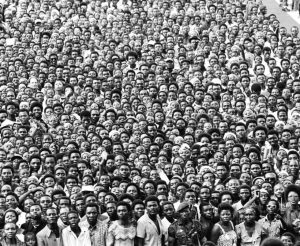
La fisiorracionalidad (apuntes anteriores)

1.Tom Hanks más allá de la isla de Tom Hanks

¿Por qué el personaje protagonista (interpretado por el actor Tom Hanks) en el Naufrago(2000), no abrió el paquete FEDEX con el dibujo de las alas, como hizo con los demás paquetes que había encontrado después del naufragio (caída del avión de transporte), sino que lo guardó utilizándolo como atrezzo para un plano espiritual que le alimentó -que al final lo salvó- durante los años que estuvo solo en la isla?

Un aspecto quizá crucial sería el hecho de que lo que sugería el dibujo de las alas era algo abstracto, no físicamente presente; porque la limitación física del espacio para el personaje era ciertamente un infierno. Entonces quizá intuyera el valor de mantener sin relevar el contenido del paquete -y todo el misterio que sugería- precisamente porque era la calidad abstracta y no física lo que le permitía elevarse sobre las circunstancias de su cuerpo, y todo eso que podía tocar, y lo insidioso que podía resultar esa limitación si no tenía adónde proyectar su experiencia al menos fisiológico-cognitiva. En este sentido, puede decirse que se trata de una forma de imposición fisiorracional por cuanto proyección fisiológica, pero según los limites acuciantes de las reducidas posibilidades físico-espaciales de la isla; que esto es para lo que sirve exactamente la religión (que es consustancial por otra parte a la antropología sedentaria) para compensar, en cierto sentido, la inmovilidad de la vida sedentaria; una compensación que es también la acomodación de una fisiología evolutiva subyacente, y que toma la forma de la proyección fisiológica en el querer individual de ser esta u otra profesión, y en la vigorosa constancia de un tempo y vida de labor.

Pero también la espiritualidad es otra forma de proyección fisiológica que, antes de manifestarse en la conducta humana, es mucho más -si no totalmente- totémica dentro de un espacio casi por completo cognitiva que efectivamente permite remontar vuelo sobre el confinamiento agrícola.

En todo caso, parece razonable preguntar por las causas detrás de la necesidad de que haya un plano espiritual, más allá de aquello que sí podemos tocar, sentir, comer; aquello que podemos construir o romper; o eso que podemos exibir y enaltecer ante los demás; lo que también igualmente cabe que desacralicemos y destruyamos. Esto es, ¿qué es lo que hace que los seres humanos nos sintamos atraídos por la fuerza de lo ausente? ¿En qué sentido exactamente nos sirve el postular sobre aquello que efectivamente no podemos comprobar de forma inmediata a través de los sentidos? Y también: ¿es posible que las creencias religiosas más elaboradas, que son consustanciales a las culturas más sedentarias, se deben precisamente al hecho de que las antropologías sedentarias ya no tienen a su disposición los efectos posiblemente sedantes del desplazamiento físico, como en el que sí viven las culturas estrictamente nómadas?

Una vez constatada la necesidad fisiológica de horizontes más amplios, resulta evidente que sobre lo ausente sí que tenemos los seres humanos el poder de postular conceptos que, mientras no son propiamente empíricos, sí pueden ser lógicos aunque solo sea en un sentido formal, pues a fin de cuentas, ¿quién puede invalidar cualquier aserto que hagamos sobre lo ausente? Y así, como forma de poder de imposición, también cabe preguntarse por qué renunciaríamos, entonces, a ejercer un poder que evidentemente poseemos.

Es seguramente como poder que efectivamente puede ejercerse que habría que enfocar lo espiritual; un poder como finalmente instrumento que nos eleva por encima de las limitaciones físico-sensorias inmediatas. Un instrumento, entonces, del que las culturas que sí viven más dependientes del desplazamiento físico y nómada no precisan de la misma manera, puesto que viven físicamente el mismo horizonte de imposición vital que la antropología sedentaria solo puede conocer mayormente de forma fisiológico-sensoria.

Y aquí cabe hablar de la cultura en su vertiente fisiorracional como espacio que nos permite vivir (¿ejercitar?) nuestra naturaleza fisiológico-sensoria sin que peligre la complacencia estructural y respecto las de por sí limitadas posibilidades de la vida sedentaria. Pues no hay, al parecer, otra forma de acomodar la fisiología humana de origen pre-agrícola al nuevo contexto sedentario, en buena medida posevolucionario.

https://en.wikipedia.org/wiki/Cast_Away

2. Un poder que puede efectivamente ejercerse…

Vidas Cruzadas

Doce muertos. ¿Saben cuántas vidas salvó Heimlich, ese viejo de 96 años de la residencia de Cincinnati? Se cuentan por cientos de miles, si no por millones. Los dementes que conducen camiones no pueden ni soñar con esas cifras. Su irrelevancia estadística los convierte en un engorro obsceno y tramposo. Siempre salvaremos más vidas de las que ellos siegan.

(Conclusión del artículo de Javier Sampedro en El País, 21 de diciembre, 2016 a modo de necrología en referencia al fallecimiento de Henry Hemlich una días antes)

___________________

Evidentemente, el autor aquí coteja en realidad dos planos diferentes que están en pugna, digamos fisioantropológicamente, el uno con el otro. Sirviéndose de un marco abstracto, diacrónico, y efectivamente estructural, respecto de una demografía humana que está sujeta en su propia calidad difusa y múltiple, en un tiempo dilatado, finalmente generacional, el autor logra señorearse sobre la violencia cruenta y sensoria del terrorismo (pues así es como hay que describir la vertiente política de la violencia terrorista, ante todo como una iconografía sensoria del horror que se brinda en una exhibición pública cruenta y atroz.)

Y así, frente a la experiencia intensa y fisiológicamente envolvente del horror sensorial en nuestra percepción de toda brutalidad, la cultura siempre ha contestado con la imposición necesaria de una narrativa lógica que solo el grupo en sí está capacitado para proporcionar y que, si bien no tiene porqué ser empíricamente cierta, es una lógica que sirve crucialmente para que el grupo no se disgregue ante los embates del mundo real, físico-espacial, ni tampoco que el grupo se deshaga merced de la anomia fisiológica interna de cada uno. Pero claro, como aquí se trata de un autor que es también científico y que hace un periodismo científico para profanos (como columna periodística semanal sobre temas referentes a la investigación), sí que se nos invita a tener por poco más o menos que infalible el método positivista (y así, a grandes rasgos, debe ser) aunque en rigor la racionalidad humana tiene un fin estructural original más profundo.

Y es que en cierto sentido todo congruencia social y colectiva -bien fisiosenosoria y espacial, o bien la simbólica, silábico-lingüística o finalmente conceptual- ha servido siempre a los grupos humanos para señorearse como tal, esto es, como grupo que no se disgrega, sobre la realidad circundante. Es en este sentido que se puede decir que la racionaliad humana tiene una funcionalidad más profunda, anterior y por debajo de el uso técnico de la misma y cuya consolidación metodológica en la historia se suele asociar con, por ejemplo, los diálogos de Galileo. De hecho, es la Ilustración que podemos considerar como continuación del proceso, al menos teórico, de la separación de los dos ámbitos naturales de la experiencia humana -y la de los grupos universales en que ésta se basa- respecto de una sensorialidad natural que resulta preciso superar, y otro plano más allá (técnicamente superior) que consiste en el simple registro empírico de los hechos medibles, y que solo después pueden interpretarse según la más rigurosa objetividad.

Pero claro, éste no es el fin que de la racionalidad humana hacen los grupos humanos para parapetarse contra los embates del mundo natural, y para preservarse precisamente en su unicidad numérica, frente a todo tipo de fuerzas contrarias exteriores, incluyendo, crucialmente, otros grupos humanos rivales. El proceso estructural de la consolidación sociorracional del grupo humano tiene que ver ante todo con la fisiología precisamente individual de las partes humanas (o sea, los individuos físicos) que componen el grupo; y es esta experiencia metabólica que sí resulta maleable en cuanto que nuestra sensorialidad está expuesta al estímulo sobre todo visual.

¿De que otra manera pudiera crearse una unicidad colectiva que no puede fundirse físicamente de ninguna manera en uno?

Y así, si todos presenciamos lo mismo nuestros respectivos procesos congnitivos pueden muy bien homogenizarse (esto que haría falta en alguna medida para que el grupo siga siendo grupo); pero para esto tiene que ver una disposición genética en todos nosotros y universalmente para al menos equilibrar lo que percibimos y sentimos sensorialmente in corpore con alguna noción -o solo una presencia- de aquello que el grupo puede tolerar, y, lo que, por el contrario, los demás no pueden de ninguna manera consentir. Se hace preciso, pues, que exista un paradigma mínimo de individualidad grupal (o socioindividualidad) que supone, a grandes rasgos, un modelo de ser individual que todos los demás son potencialmente capaces de aceptar, o que al menos éstos reconocen.

La forja de este patrón cultural y sociorracional (por cuanto de aceptación colectiva) se asienta sobre el bucle que se forma entre fisiología sensoria individual y la congruencia grupal, pasado todo esto necesariamente por la socio-homeostasis opróbica (término que utilizo yo para nombrar dicha tendencia inherente y universal respecto a todos nosotros de ser cada uno in corpore pero de manera extrínseca en los otros, como verdadera alienación técnica de la fisiocorporeidad individual en aras de la permanencia en el tiempo del grupo)1.

En este sentido, la congruencia grupal supone siempre una clase de respuesta a la anomia fisiosenorial individual, que no es nunca inicialmente conceptual, sino físico-corporal, de gesto y que solo después en el tiempo de la evolución biosocial nuestra y como especie (como múltiples grupos dentro de la historia universal humana), pudo ser silábica, lingüística, finalmente conceptual. Si bien el origen de lo simbólico-semiótico pertenece al tiempo humano ciertamente pre lingüístico, pero únicamente posible para un grupo, que de presenciar todos el mismo evento, por ejemplo, quedan a partir de entonces todos aglutinados, por decirlo así, alrededor del recuerdo colectivo del mismo (¿qué sería esto sino un proceso de creación semiótica?)

Y es precisamente el estímulo extremo que padecemos como individuos sintientes lo que obliga al grupo -en aras de su propia continuidad integral- a sobrellevar dicha irrupción fisiológica dando cauce a la misma, pero apropiándosela como fuente del estímulo que desemboca nuevamente en su propio refuerzo estructural vigorizado.

Pero, ¿cuál de los puntos de contemplación tiene razón sobre el otro? ¿Debe la visceralidad fisiológico-sensoria primar sobre el pensamiento abstracto? Naturalmente aquí hablamos en realidad de dos cosas en cierto sentido no comparables, como los proverbiales manzanas y naranjas. Pues fíjese como el mismo autor, que defiende y maneja una visión racional y estadística, recurre, no obstante, a lo que constituye la presentación de una imaginería sensoria en positiva, respecto el discurrir ordenado de la vida sobre el planeta, día sí y otro también, pero en la plasticidad imaginaria y mental de la figura un ser humano (héroe) que auxilia y salva a otro (afligido), y esto una y otra vez, a en el tiempo…

Es decir, que la proposición conceptual de autor -su tesis- adopta la forma de una estrategia de persuasión también sensoria, destinado a remachar en realidad una idea, pero a través del la imagen mental y los procesos perceptivos (fisiocogntivos) del lector.

Y es interesante notar que solo la mención de unos cuantos detalles (Heimlich, 96 años; la residencia de la tercera edad de Cincinati; dementes y sus camiones, etc) surte un efecto de verdadera deleitación en el lector que ayuda acelerando nuestra propia capacidad cognitiva para recrear imágenes mentales que son, además, de relevancia moral en nuestra apreciación de las mismas y en el efecto fisiológico que su percepción nos provoca.

No se discute, como es obvio, la razón moral respecto del terrorismo (que no la tiene, claramente) sino el hecho sensorial del mismo sí que es real y contundente, en su capacidad visual y de imagen para hacer añicos el ánimo individual, desgarrado sumariamente en el mismo momento de la contemplación por algo así como el atávico regreso a nuestro propio origen sociofisiológico y de especie nacida, sin duda, de largos milenios de violencia inmisericorde.

Pero, de inmediato, preciso se hace reconocer la fuerza real sobre nosotros de la violencia en su forma sensoria, ante nosotros y en toda modalidad de percepción e imagen finalmente mental (en la contemplación visual directa, la fotográfica o fílmica, como parte también de toda imaginería narrada a través de las palabras, y también en los recuerdos, qué duda cabe). Y eso seguramente porque estamos fisiológica y sensorialmente hechos a partir de la violencia para servirnos de ella misma, como la perpetua raison d´etre de sociorracionalidad grupal; esto es, para reforzar avivando dicha racionalidad en un proceso sin fin de regeneración catártica, a través de longevidad de los vivos y de una generación a otra.

1 Una respuesta «opróbica» y cómo utilizo este concepto

Vidas Cruzadas(El País)

3. Una libertad humana

La rosa es más pintada si su raíz se embebe

de la sangre de un César que prestigió una era;

y el jacinto es hermoso porque su origen debe

al que por mis caricias de tus rizos cayera.

(Poesía19 del Rubaiyat en traducción del ingles)

La individualidad se puede concebir desde la óptica estructural de los grupos humanos como un dispositivo de control homeostático a favor de, subordinado por, simplemente la permanencia colectiva en el tiempo. Pero, sin embargo, la capacidad del hombre cultural de imponerse fisioconcepetualmente sobre la realidad misma que le rodea, pudiera contemplarse como quizá una salida estructuralmente lícita respecto del contexto sedentario que se acaba compensando en la posibilidad de un espacio de imposición fisiológica y eferente, empero sin que peligre necesariamente la consolidación grupal y sociorracional. Y esto supone una mayor cuota de libertad para el ser humano, libertad que quizá también haya que enfocar como estructuralmente necesaria frente a la inmovilización agrícola y el problema que esto supone para una fisiología como producto (aun hoy en día) de una época de evolución humana previa y ya finada.

O sea, que el hombre es libre, en realidad, en su existencia fisiosensorial -y en todas las actividades que significan el ejercicio fisiológico-sensorio- y sobre todo en su capacidad de imponerse fisiorracionalmente.

En cierto sentido esta libertad supone en realidad la posibilidad de compensar su propia entidad fisiológica respecto de la limitación sedentaria en la que vive atrapado. O otra forma de expresarlo sería en términos de una adecuación de su entidad física, producto de la evolución humana anterior, al contexto histórico nuevo que efectivamente acabó con dicha evolución (esto es, el largo y paulatino proceso de la aparición en la historia de la agricultura).

Se trataría, entonces, de una libertad sobre todo fisiológica que es en realidad estructuralmente necesaria como una forma de anomia individual que alimenta el proceso sociorracional del grupo y su unicidad superviviente ante el espacio histórico; esto es, que la anomia fisiológico-sensoria del individuo supone la causalidad más importante y fuerza fáctica de la respuesta sociorracional del conjunto.

La importancia, desde esta vertiente estructural, de la libertad humana -entendida como una intrínseca vitalidad fisiológico-sensoria (fisiocorpórea) individual-, está, pues, en que es la argamasa real de los grupos antropológicos como aquel ímpetu desabrido que haya que definir después y en la congruencia simplemente del conjunto, pero a través del sujeto homeostático, claro está.

Se ve claramente, entonces, que el requisito necesario para el funcionamiento en el tiempo de los grupos humanos sedentarios, según esta suerte de mecánica arriba bosquejada, sería algo así como el dilema moral a partir de un plano fisiorracional y cogntivo del individuo (sujeto a la perenne fuerza del oprobio biológico) frente al plano real (‘sociorracional’) de escrutinio publico, moral y de carácter siempre político, donde efectivamente los actos adquieren una gravedad que solo la existencia corporal nuestra puede prestar.

Pero el dilema moral es producto, en realidad, de un paradigma ahora algo más elevado, de individualidad estructural que sirve como dispositivo de incorporación de la anomia fisiológica individual respecto del yo social que, a grandes rasgos, adquiere una uniformidad mínima pero sorprendentemente delimitado, como patrón cultural de aquella forma del ser social que sostiene el grupo particular histórico. Es decir, que la permanencia del grupo supone una unicidad en base a un yo social como homogeneización fisiosensoria pontencialmente admisible por cuanto comprensible por todo miembro del grupo.

Y frente al dispositivo de la individualidad social (ciertamente estandarizada por la fuerza opróbica) es la fisiocorporeidad y su oposición, en cierto sentido categórica a todo el proceso sociorracional en sí (en efecto, esto supone su función estructural más importante) que constituye la personalidad individual más intransferible.

En todo caso, es el dilema moral que acaba sirviendo como un ejercicio estructuralmente necesario de tonificación fisiológico-sensoria, frente a las circunstancias de la antropología agrícola. La individualidad, desde esta óptica exclusivamente estructural, supone la permanente renovación y reconstitución de este dispositivo central de los grupos humanos que establece la unión en la paradójica separación entre la fisiocorporeidad individual, y el ser social del grupo superviviente.

Porque supervivencia humana, no hay más que una.

(La cultural)

4. El poder sostenido en equilibrio

Un continuo pues entre fantasía y congruencia respecto la orientación simbólica socialmente regularizada de los seres humanos y los grupos de los que son dependientes; pero mientras el sentido de una mayor congruencia resulta fácilmente comprensible como herramienta de imposición y supervivencia humana, no queda claro, sin embargo, el porqué de la voluntad fantástica nuestra a no ser que igualmente se comprende como una forma también de imposición humana que supone, efectivamente, la afirmación fisiorracional humana sobre y en contra de las limitaciones físicas nuestras. Y en la fijación impositiva nuestra de una lógica -la que sea con tal de que permita la actividad fisiológica y social nuestra- se crea un marco estructurado de la misma posibilidad fisiológica colectiva que puede de hecho sostenerse colectivamente y en grupo precisamente porque se desarrolla en torno a, y regido por, nociones lógicas y conceptuales, de carácter finalmente semiótico por cuanto rigen la fisiorracionalidad de cada uno de los miembros del grupo, lo que supondría un paso más allá de simplemente lo simbólico.

La lógica y lo conceptual (lo idealizado y finalmente semiótico) es aquí aquello que delimita y define el contexto fisiológico-social respecto de eso que para el grupo tenga sentido, sea apropiado, licito, previsible y de sentido colectivamente común; porque de lo contrario las posibilidades fisiológicas del grupo -en grupo como tal- rápidamente se desvanecerían en la anomia fisiológica de cada uno, cada uno a su manera y según lo que le fuere naciendo en gana, furia e impulso particulares, situación que conduce finalmente al ahogamiento de la conciencia humana en su propia sustancia fisiológica, y dado que la experiencia nuestra, aun en su misma potencia racional, es fisiológica: como treta pues la cultura humana universal se alza en contra de su propia indefinición fisiovital, apostando siempre fuerte hacia su propia imposición fisiorracional y fisiosemiotica, sobre la realidad circundante y espacial y hacia lo que es la consecución de la supervivencia del grupo, mediante lo única forma que puede valerse, claro está, que es su propia invención lógica, mas non troppo y sin pasarse fisiológicamente en su propio ímpetu racional, que no deja de ser, por otra parte, una vertiente más simplemente de su propia esencia vital y fisiológica. Congruencia con la realidad, sin que esto sea una forma finalmente enrevesada e igualmente fisiológica de negación de nuestro propio modo de ser y estar en el mundo.

__________________________________

5. El «sentido» hedonista del estar humano*

Puede ser que el «sacrificio digital» (de cortarse un dedo), o el sacrificio por inmersión, halocausto o el «despilafarro ritual» son todo ellos primero y ante todo formas de poder individual de imposición, desde luego visceral, ante las circunstancias que nos rodean y que nos pueden fácilmente desbordar. Pudiera ser, entonces, que lo que es un artefacto de simetría conceptual, respecto de efectos que corresponden a causalidades designadas -y que son por tanto contestables de alguna manera-, se originan primero en el efecto mismo, esto es, en el pavor individual de la presa animal atrapada y sin salida real que se vislumbra, salvo acaso solo únicamente la voluntad de perdurar, nada más; y precisamente en este contexto puede ser la intensidad del efecto aquello que nos impulsa raudos hacia cualquier conexión cognitiva formalmente lógica que podamos hacer, para guarecernos de alguna manera probablemente contra el derrotismo fisiológico.

Hedonista entonces, porque a partir del estímulo intenso (incluso dramático y brutal) y solo a nivel corporal-sensorio, tenemos sin embargo el poder de trazar causas no obvias que son creíbles al menos en la medida en que tampoco pueden contradecirse, y aunque solo nos sirven como el proverbial clavo ardiente, cuyo quemazón sobre nuestro tejido sensorial lo aprovechamos fisiorracionlamente para impulsarnos hacia una esperanza al menos fisiológica y como repuesta corporal, esto es, como un modus operandi visceral y feroz, que es racional en cuanto al sostén mental que hace esta resistencia fisiocorporal posible.

Y posiblemente sea la clave aquí respecto el funcionamiento de esta mecánica simplemente el hedonismo, como el vivir nuestro en la sensación que es, aquí se ve, en realidad el vivir de ella, de sobrevivir gracias a nuestra experiencia sobre todo sensoria. Y esto posiblemente porque el fundamento de toda racionalidad (y por tanto de todo yo social o grupal posible) ha sido y es, siempre, la revitalización fisiológica ante la necesidad socio-espacial de reconstituirse en una sustancia grupal, sociorracional particular y culturalmente determinada.

Con lo que se empieza a evidenciar la relación real que hay entre nuestra experiencia estrictamente físico-sensorial y lo ausente, relación que supone desde seguramente el inicio histórico de los grupos humanos (que obviamente brota del plano animal original), la subordinación sensorial y totémica de la realidad físico-espacial circundante a manos, como si dijéramos, del mundo socio-simbólico del grupo. Y esto se debe a la vitalidad hedonista humana que, ante las dificultades que se nos plantea la existencia física, nos capacita para intentar arroparnos fisiorracionalmente en el plano colectivo de lo semiótico (conceptual y también simbólico) frente a todo lo no humao que nos rodea y con lo que no cabe comunicación alguna. Esto es, hacemos esto porque podemos, y no tenemos razón alguna para no hacerlo.

Y porque nos lo pide el cuerpo y nos sienta bien, sin duda.

Después se constata el enorme poder de supervivencia que históricamente los grupos humanos han procurado agenciarse, de manera geométrica y estructural, de la experiencia sensorial individual y singularmente físico.

————————————————————

*Cosa que se le escapa a Burkert (en Creation of The Sacred: Tracks of Biology in Early Religions, 1996) o respecto la cual no tiene una vision conceptualmente explícita. Establecer conexión entre simetría conceptual y fisiología, que ya en sí misma se base en una suerte de correspondencia entre estímulo y respuesta sensoria de todo organismo.

6. La geometría físico-sensoria de los grupos humanos y la fisiorracionalidad

Geometría grupal: sensorialidad individual que sirve para reforzar unicidad del grupo combatiente, frente al mundo externo, físico-espacial (tanto natural como humano).

Fisiorracionalidad y Yo social: espacio en principio disponible sobre el horizonte cultural donde se refleja una individualidad más desarrollada; individualidad social a la que se le convoca a una mayor carga de discernimiento personal dentro de una obligación moral mayor exigida estructuralmente por el grupo. En este sentido, el yo social entra en una nueva clase de libertad fisiológica, mediante una recoporeización en el plano al menos simbólico de su propia personalidad social, que queda libre precisamente porque se mueve un plano más simbólico (lingüístico, artístico) y tendente hacia lo estético, que no obstante sigue reteniendo una vigencia moral-opróbica.

Y ésa debe considerarse la mayor ventaja del desarrollo del plano simbólico y fisiorracional humano: un nuevo espacio de expansión fisiológico-sensoria, empero dentro de los confines de antropología agrícola y la complacencia existencial que la vida sedentaria permite. La religión y el arte (en todo sus modalidades, y respecto crucialmente la conversación) suponen ámbitos de oportunidad para el individuo de imposición fisiorracional respecto, como siempre, las insípidas limitaciones físicas de nuestra experiencia simplemente corporal y sensoria; si bien anteriormente esto se descargaba en buena media gracias el desplazamiento físico de la vida nómada, a partir de la agricultura estos nuevos espacios se vuelven perentoriamente obligatorios (como es evidente en el hecho de que toda cultura asentada y agrícola existe siempre solo en función de un plano simbólico superior de naturaleza totémica de sus propia creación y sostenimiento).

La religion en este sentido supone un sistema en esencia culturalmente obligatoria, de ejercicio y tonificación fisiomoral sin el cual la vida sedentaria sucumbiría otra vez a la anomia fisiológica en forma de distintas clases de violencia con el efecto último de disgregación: y surte la religión este efecto unificador porque es en sí misma una forma de tensión, una forma en sí misma de violencia moral, sin duda para el individuo a quien se le obliga (se obsequia, en realidad)  a entrar en el bucle de su propia afirmación sociomoral que es el contexto, al fin, de la individualidad social y psicofisiológica respecto de un grupo humano histórico-particular, sobre una geografía determinada, o esto originalmente, pues precisamente en la instrumentalización de la experiencia fisiológico-sensorial la cultura se ha elevado siempre por encima de, frente a, la realidad solo física, solo material.

La violencia más física de la vida estrictamente nómada PASA A SER una violencia moral (y crucialmente de carácter sobre todo sensorio) dentro de los contextos sedentarios que han de seguir acomodando al constante que supone la fisiología opróbica humana original que se hubiera configurado en un tiempo anterior de nuestra evolución.

Y, con el tiempo, el desarrollo necesario de un plano simbólico para que haya religión, también es lo que permite que se efectúe una especie de recorporeización virtual de la individualidad social que, en el plano simbólico ahora existente, vuelve a recuperar la libertad de una nueva amibgüedad que le obliga nuevamente a discernir nuevos contextos del bien y del mal, pero a partir de una óptica un poco más particularizada y respecto un individuo que inicialmente no existe físicamente, sino solo de forma simbólico-virtual, en la relevancia opróbica del discernimiento moral, pero anteriormente a todo acto de decision propia, que es al mismo tiempo político y socialmente observable que acarrearía, entonces y de realizarse, todas las posibles consecuencias correspondientes para el cuerpo finalmente físico.

7. Otra clase de penuria humana

El ser humano frente al espacio que solo su limitada percepción sensoria puede abarcar, recurre a los procesos cognitivos -crucialmente entre ellos el poder de deducción- para poder seguir imponiéndose sobre lo que le rodea, en el sentido del máximo control posible, o la visceral vivencia como sensación del mismo. De hecho, no de otra forma hay que consider la imposición fisiorracional, que no es totalmente empírica nunca, sino que se produce sobre todo a partir de una necesidad sentida, «sensual» (e incluso hedonista) de confort psicológico.

La idea de que la imposición fisiorracional sea una extension del arropamiento con el que puede protegerse el hombre, solo puede, sin embargo, sostenerse a partir de una capacidad entendida como otorgada en realidad por un grupo humano como auténtica centralidad antropológica: la unión entre individuo y colectivo es precisamente el punto fisorracional como artefacto en ejercicio del sujeto-agente social; pero su propio autorrealización fisiológica dependerá, máximo tratándose de los contextos sedentarios, de una mínima adquisición del universo semiótico del grupo al que pertenece, ese grupo para el que se es un individuo en un sentido más técnico e instrumental.

Pero precisamente es en este sentido que pueden pensarse los colectivos como fuente de riqueza, auténtico «lujo» vital, puesto que son los grupos que arropan fisiológicamente (esto incluso respecto los animales) los seres singulares. Y es que los contextos fisiológicos no físicamente trascendentes (los lingüísticos, religiosos-artísticos; e incluso los deportivos que, aunque físicos, no trascienden moralmente; o respecto de cualquier experiencia audiovisual contemporánea) son cruciales para la posibilidad sedentaria humana y la viabilidad de la misma que debe su misma complacencia base al hecho de que permanece sujeto, paradójicamente, a la contingencia de su propio estímulo sensorio-moral.

Pero la individualidad comprendida de manera extirpada del hecho colectivo y desde una óptica del solipsismo de solo la sensorialidad estrictamente singular, constituye una  forma de pobreza cuyo recurso a mecanismos culturales que permiten remontar la miseria de nuestra limitación física, son más bien escasos.

Algunas simbiosis* de entre las partes en el tiempo…(apuntes anteriores)

1.El individuo fisiocorpóreo FRENTE A el yo social

Con el tiempo el espacio sociorracional convierte la fisiocorporeidad (y su fondo opróbico) en una fuente de titilación -como ciertamente una forma de precariedad sensorial– que mantiene en una necesaria tensión la sociorracionalidad y siendo el medio principal de su reconstitución efectiva en el tiempo, y según la propia naturaleza incoactiva de la misma.

2. El yo fenoménico-opróbico (o sea, fisiocorpóreo) FRENTE A la agencia tempo-estructural y financiera

Para la agencia tempo-estructural y financiera, todo intercambio fisiológica y sensorialmente directo entre los seres humanos está completamente mediatizado por unas circunstancias y una estructura del todo ausentes; por eso, cuando uno se ve frente a otro ser delegado que representa la corporación o organización para la que de hecho trabaja y con la cual Ud tiene algún asunto que resolver, la sustancia fisiológicamente inmediata de la experiencia, digamos entrecorporal, suele servir, a grandes rasgos, para enmascarar los puntos más desagradables de dicha agencia tempo-estructural y financiera, pero particularmente respecto de un individuo (o sea, Ud.) quien en sí mismo, y por sí solo, no es nada; de hecho, probablemente sea este el aspecto más grotesco de todos, respecto de un pensamiento en realidad macro-estructural que por razones morales (muy serias, además) tiene que fingir en buena medida un interés real en la persona de Ud. Se hace preciso, por tanto, que cuando nos encontramos en una situación fisiosenorialmente inmediata, pero respecto de una persona delegada de parte de una corporación u organización mayor, el preguntarnos por las posibles razones estructurales mayores y agregados (estas que son en realidad, y si lo meditamos bien, las que más importancia tienen para ambas partes puesto que el verdadero poder parece cada vez más de parte de la corporación) que pueden estar dirigiendo desde atrás, por decirlo de alguna manera, la experiencia fisiológica-sensorial directa; porque Ud ha de saber que es su percepción y el fondo finalmente opróbico de la misma la que sirve básicamente de pantalla respecto de los intereses estructurales de la organización, puesto que de hecho solo su experiencia sensoria conoce Ud que resulta ser, en manos de otros, una forma de trampa que le impide ver el plano racional más abstracto y técnico; y trampa sobre todo porque la sensorialidad humana es en sí misma una forma de significado incipiente -puesto que echa sus raíces en el fondo mismo opróbico de Ud y su persona física- pero extirpado de una contextualización más amplia, que en rigor no tiene nada que ver con Ud, sino normalmente con miles -o millones- de seres humanos como Ud en el decurso de un tiempo estrictamente financiero.

Pero, en esencia, la técnica es similar exactamente a la del mago, salvo que el mago, como se acepta tácitamente que nos está presentado un artilugio de engaño, se exime de cualquier acusación de manipularnos opróbicamente: el ilusionista arrumba todo plano moral mediante un sentido artístico, casi deportivo que se arroga para sí. Lo mismo, empero, no se puede decir en ningún caso de la corporación, puesto que cuanto más urgente, real y «serio» le parece a Ud el asunto a tratar, más manipulable -maleable- resulta para la agencia tempofinanciera. Y es que en el paroxismo opróbico de la moralidad como mecanismo antropológico, los significados dejan de ser conceptuales y se descontextualizan de todo: pues en el estímulo solo opróbico Ud alcanza una suerte de efervescencia fisiológica que, no obstante, sigue cargado de un significado moral muy importante, pero que al mismo tiempo no deja de ser una experiencia onanista, dado su naturaleza exclusivamente sensorial y, por tanto, no trascendente respecto de otras personas inmediatamente físicas (eso que hace que dicha experiencia sea moralmente real, a la vez que de ninguna consecuencia real inmediata puesto que no tiene -inicialmente- un sentido que puede comunicarse fácilmente). De ahí aquí cualquier lógica que a Ud le pongan delante, fácilmente se la apropiará como suya, según sea la habilidad -en la urgencia opróbica, normalmente- con la que se la hayan endosado, o eso al menos inicialmente y como efecto impulso, puesto que es de suponer que después y con el tiempo de reflexión, Ud. se lo pensará mejor, sin duda.

Frecuentemente Ud observará también el hecho de que la persona con la que está hablando, mientras normalmente es de lo más amable y competente, no sabe, sin embargo el porqué mayor de las cosas que muy profesionalmente maneja a nivel de usuario. Su ignorancia, en este contexto y respecto el plano macro-estrctural, es esencial porque en la entereza moral del empleado (porque efectivamente, no sabe), es la corporación que se parapeta éticamente, puesto que a Ud nadie le ha mentido nunca. Y así se hace necesario postular que la estrategia rectora de la corporación consiste en operar en el plano técnico arrumbando, en la medida que esto sea posible, la moralidad colectiva; que es un afán que en el fondo aspira a alcanzar un nivel de dominio técnico más allá simplemente del bien y del mal, empero instrumentalizando lo que viene a constituir un nivel inferior objeto de su propio domino y agencia, esto es, el entorno fisiológico-opróbico en el que habitamos los cuerpos nuestros, él de Ud, el mío, y los de todos los demás.

3. Información natural FRENTE A la información cultural

En un sentido la información así calificada de «natural» actúa como un mecanismo de corrección de la otra parte cultural, puesto que el individuo percibe ante todo como socio individuo de un grupo históricamente particular desde su incorporación propia a un paradigma de socioindividualidad también particular que corresponde a una sociorracionalidad colectiva ya culturalmente establecida. Pero como la sociorracionalidad es en sí producto siempre de la fisiocorporeidad estimulada en un contexto históricamente específico, siempre queda pendiente de su propia constitución como socioindiviudo  efectivo -según los vaivenes de la energía y características vitales de la persona física, entre otros factores-; en caso del estímulo extremo, que en su desbordamiento se convierte para el sujeto sensorial en una forma de precariedad sensorial que vuelve a instaurar, de repente, la ambigüedad que nuevamente haya que descodificar, la constitución sociorracional supone el proceso mismo de convertir información natural de nuevo en información cultural. Y es que la información cultural es, según la definición de Borgman, información para manipular la realidad que es lo mismo que decir que es una información que supone un proceso de imposición; imposición que solo el grupo puede garantizar en la forma de una sociorracionalidad cuya función principal y de origen es la de permitir simplemente que el grupo se mantenga en el tiempo frente al espacio físico-material circundante.

La clave aquí es pues la sensorialidad humana, siendo todas estas dicotomías (información cultural-natural; la fisiocorporeidad-yo social) una apariencia superficial respecto de una realidad subyacente, que tiene que ver con la relación que hay entre lo sensorio y la racionalidad. El mecanismo antropológico de los grupos humanos se alimenta estructuralmente de la individualidad sensoria de los sujetos dependientes, siempre que permanezcan efectivamente independientes en su sensorialidad, que pudiera considerarse una función estructural correctora por parte de la libertad humana respecto lo sociorracional y consabido.

Parece asimismo cierto, entonces, que la relación real entre una y otra clase de información (según tal y como dicho autor las contrapone) es la de una expansión por parte de la cultura que, en su avance, va alimentándose, por así decirlo, de la información natural; por lo que se aprecia una dependencia de la información cultural en la precariedad sensorial que supone la contingencia real de la información natural, aun no asimilada. Y podemos aventurar la explicación de que la novedad que es la contingencia sensorial de lo no consabido, corresponde directamente a la posibilidad físico-sensoria del individuo singular, libre, de repente y en el momento mismo de la reconstitución sensorial, de toda atadura anterior. Pues el momento de la percepción que  efectivamente desborda de alguna manera lo consabido, supone la contingencia misma de la anomia fisiológica, que solo así en cuanto tal -esto es, como una forma de precariedad sensorial-, queda el individuo fisiocorpóreo encauzado de nuevo a su propia sociorracionalización.

Así puede postularse que la tonificación sensoria del sujeto fisiológico-cognitivo viene a suponer, en el decurso de la evolución sociobiológica nuestra, el punto estructural clave de los grupos humanos en el tiempo.

________________________________

Borgman, Holding on to Reality. The Nature of Information at the Turn of The Century (1999)

4. ¿Cómo se relaciona Adam Smith con la noción de adversarios fisiocorporales?

El concepto de la avaricia como bien común en el plano estructural (greed is good), se parece mucho a la idea de Konrad Lorenz, de significado a través de oposiciones fisiológicas entre seres diferentes en conflicto y respecto de un espacio físico compartido: todo afán de acumular ganancia económica supone un ímpetu fisiológico que, mediante el conflicto frente a otros, se encarga de regular el sistema, de forma muy parecido a como funciona la individualidad antropológica que crea y reafirma en el tiempo una sociorracionalidad funcional a partir de la furia estrictamente individual por vivir e imponerse sobre la realidad.

Es decir, que el significado del ímpetu vital individual solo aparece después en el contexto de un espacio compartido -verdaderamente disputado– entre los individuos que ocupan un mismo espacio físico; esto es, que solo la circunstancia colectiva (o al menos multiindividual) puede dar lugar a un significado de naturaleza sociorracional respecto la conducta individual: solo «significa» algo todo aquello que yo hago por cuanto sea percibido por, en cuanto sirva de estímulo sensorio para, otro ser humano. Y, naturalmente con el tiempo, todo lo que hago y respecto aquello que considero que soy yo, no tendré más remedio que entenderlo de forma extrínseca a mí propio ser estrictamente singular, y aunque esto pasa desapercibido en buena medida por mí, pues me entenderé racionalmente mediante el único instrumento que para ello tengo disponible, que es a través de la sociorracionalidad grupal (‘cultural’) de la que ya forma parte mi entidad fisiológico-corpórea sin que yo sea, en realidad, muy consciente de ello.

Y es que parecería que estamos condenados, entonces, a estar primero en nuestro ímpetu fisiológico-vital y corporal, para solo después y mediante una suerte de elipsis socioopróbica, llegar a ser en la enajenación técnica que es el yo social en sí. Con el tiempo, naturalmente, la parte enajenada, esto es, la fisiocorporeidad individual, acaba por erigirse en oposición -sobre todo en su parte estrictamente corporal, pero que en incluye, claro está, las emociones- como oposición críptica frente a la fuerza sociorracional y opróbica de toda cultura; una nueva oposición que, en realidad, siempre refleja la misma paradoja fundamental de la supervivencia humana, esto es, en grupos, y no la supervivencia en ningún caso de los individuos.

Y como fuerza y oposición mutuamente correctoras, entonces, se enconan las dos partes, mas solo la parte sociorracional tiene verdadera voz que se entiende como tal, pues a la experiencia estética (o lo que nosotros la llamamos, aunque no sea solo el arte) es la que se encarga (crípticamente, claro) de centrar una vez más toda posibilidad finalmente moral, en el cuerpo mismo y su total indefensión individual.

Y la avaricia (en sentido adamsmitiano) es buena precisamente porque, teniendo el dinero a nuestra disposición cultural como herramienta, nos empuja hacia la necesidad de que seamos racionales, puesto que sin esa urgencia no existiría el porqué mismo de la comprensión racional.

O como una caja de cartón dentro de otra -cada una más pequeña que la anterior y todas al final vacías- el orden establecido permite que la sustancia fisiosensoria, en buena medida etérea, inefable e incorpórea, nos dediquemos a consumirla en la oportunidad fisiológico-antropológica que supone la longevidad de cada uno, bajo siempre, eso sí, la mano invisible y críptica mucho más decisiva que supone la configuración preconsciente en realidad grupal y socioindividual de nuestra pisque evolutiva.

La paradoja fundamental e irresoluble: los individuos disputan entre sí el predominio de un espacio físico concreto y, sin embargo, están compelidos a mismo tiempo a no separarse los unos de los otros puesto que la supervivencia real se intuye (esto es, que lo sabe el cuerpo) que está en los otros, en la permanencia en el tiempo del grupo, frente a la realidad físico-natural y humano circundante. La individualidad pudiera entenderse a nivel estructural como un dispositivo que entronca la sensorialidad individual y opróbica (y socio-homeostática) con la reconstitución permanente del grupo. Y el grupo, por mor de esa misma permanencia en el tiempo, se convierte en el entorno de forja, por decirlo de alguna manera, de una sociorracionaldad producto en sí misma de la experiencia particular del grupo que no solo sujeta al individuo desde la óptica estructural, sino que reafirma necesariamente la misma singularidad individual reteniéndola en la opacidad críptica de la experiencia opróbico-fisiosensoria, anterior siempre a toda comprensión racional.

Y en esto precisamente se puede concebir una noción cruel de dominio estructural por parte de un mecanismo que no puede librar en realidad a sus objetos humanos (¡que se creen ellos mismos sujetos!), sino que los tiene agarrados por su mismo tejido nervioso y vital.

_____________________________________

*Uso de la noción de una relación simbiótica entre dos fuerzas distintas, puede aquí no ser del todo exacto en un sentido biológico, puesto que la relación verdaderamente simbiótica tratándose de seres vivos requiere que ambas partes se beneficien (porque, de lo contrario se trataría una relación parasitaria). La acepción aquí se ha intentado manejar solo en cuanto al sostenimiento de una unicidad funcional en el tiempo, entre dos entes diferentes, que contribuyen a establecer una relación -o estado vivo- posterior, y como producto de la relación original.

Una alienación técnica de los grupos humanos

‘La cocina’

Aunque en lo sustancial, en lo que se refiere a las relaciones de unas personas con otras, a sus pasiones y sus sentimientos (de soledad, de amor, de alegría, de tristeza…), a sus sueños de felicidad, nada cambie realmente y todos sigan siendo los de siempre, esos hombres y mujeres alienados e invisibles que se levantan todos los días para trabajar a cambio de unos salarios que les permitan seguir viviendo mientras otros se enriquecen y disfrutan. O sea, usted y yo.

(Conclusión del artículo de Julio Llamazares, en El País, 25 de noviembre de 2016)


El concepto de alienación del que quizá por primera vez se oye hablar cuando le toca a uno familiarizarse con la historia contemporánea a partir de las influencia intelectual de Karl Marx (o eso al menos fue mi caso), puede también servir para aproximarnos a la individualidad antropológica, por cuanto todo yo social supone la necesaria alienación de la entidad fisiocopórea individual; con lo que alienación en este contexto quiere decir algo así como,

La definción opróbica de la individualidad fisiocorpórea particular según el hecho vital-histórico de un grupo humano específico ante el espacio físico-material.

Pues resulta lógico postular que, de no existir la posibilidad de una cierta alienación fisiológico-sensoria respecto del metabolismo individual, los grupos humanos no hubieran podido permanecer como tales, esto es íntegros, a través de la evolución biológica de la especie.

La alienación en este sentido más profundo y antropológico debe considerarse más bien como el sino técnico de toda fisiología individual que no tiene más remedio que definirse opróbicamente según la sociorracionalidad operante del grupo humano del que el individuo depende. Y es que la alienación en este sentido y contexto fisioantropológico, puede entenderse como el hecho en sí racional del grupo en cuestión y aquella definición de la sustancia fisiológico-sensorial que convierte toda metabolismo fisiosensorial físicamente singular en sujeto social, sujeto precisamente por el carácter extrínseco en los otros de lo que es, no obstante, la fisiología individual. Y como verdadero armazón racional-moral, deviene este proceso fisioopróbico en sostén y artífice real de lo que fuera alguna vez la integridad numérica del colectivo original, frente al mundo físico-espacial circundante.

El uso del concepto alienación en el texto arriba citado, inspirado por una visión progresista que nunca ha tendido inconveniente en contemplar el pensamiento de Marx en su vertiente más bien antropológica, abarca de forma no explícita este mismo sentido precisamente antropológico-estructural, si bien la necesidad (fisiológica) humana del hecho moral nos ciega un tanto e inicialmente respecto todo trasfondo técnico del contexto que habitamos y que nos sostiene. Pues la mayor vivificación que recibimos en nuestro ente fisiológico viene precisamente de nuestra contemplación visual del hecho moral, respecto de un plano social externo a nosotros que en realidad es, desde la óptica opróbica de nuestra corporalidad singular -respecto nuestra mismísima presencia continuada o no, en el mundo-, siempre un plano en cierto sentido socioafectivo. Y es solo a lo moral lo que damos verdadera importancia, digamos visceral y metabólica, a partir de la corporeidad de cada uno; los otros tipos de percepciones, aunque siguen siendo visceralmente experimentados, no llegan, sin embargo, nunca a al mismo grado de intensidad y arrobo metabólico.

Porque en la contemplación de lo moral se alimenta la individualidad antropológica mediante la experimentación de algo así como la integración total de ambos partes -la fisiocorpórea y el yo social- pues estamos especialmente sensibles como los sujetos sociales que somos a la existencia de todo aquello que rige, ordena, y orienta la vida del individuo perteneciente. Y entonces, toda injusticia y abuso de unos respecto a otros; toda desgracia que surte el efecto de que algunos ya no pueden contarse entre nosotros, tanto como víctimas que pueden ser a manos de otros, o bien como los malos desalmados que igualmente ya no puede considerarse de entre los nuestros; y, naturalmente, la muerte misma: ante nuestros ojos son todos, en su escenificación social -y también estética-, momentos de gran fuerza fisiosensoria y metabólica para nosotros, pues nuestro sino que está en el pertenecer, queda de repente en cuestión ante el horror de la evidente desintegración grupal que presenciamos en la perdida tanto física como moral de otro ser humano.

Y como efectivamente opera el autor en texto arriba citado, la sustancia sensoria de la percepción nuestra y su inexorable carga opróbica viene a suponer la verdadera argamasa de la construcción semiótica posterior (que no es en primera instancia simbólica), pues el basamento de todo significado cultural sucesivo es, originalmente, esta calidad moral inherente a nuestra presencia física y singular en el mundo que, no obstante, solo pervive -solo es– en cuanto integrante de un colectivo mayor. Y es en la elaboración posterior simbólica y cultural donde pudiéramos decir que recuperamos la libertad adánica original de imponernos nuevamente sobre el mundo -ahora de naturaleza totémica y cultural-, pero de forma siempre un tanto ciego, puesto que la creación de esa posibilidad fisiológica del ámbito ahora simbólico, se debe a nuestra subordinación fisioopróbica anterior de la que, naturalmente, somos apenas conscientes.

Y así, la tonificación moral sí que nos sostiene también ahora en el texto aquí citado, como un manjar que nos deleite en su golpe de efecto final que supone, no obstante, una experiencia sensorial a la vez que abarca un sentido conceptual. Y nos sostiene porque nos integra, efectivamente, respecto de ambas partes de nuestra individualidad bipartida, y más antropológica (por cuanto grupal) que como ente único y singular. Porque es una suerte de interpelación moral, como lo es en cierto sentido real pero subyacente, todo fenómeno visual humano.

Aunque también radica un problema en el sostener fisiológico-sensorio, que sostiene al tiempo que nos envuelve; o quizá mejor decir que el envolver es el sostener en esto de la experiencia fisiológico-sensoria humana. Con lo que resulta que el mundo social al que se refiere la cita sí que existe de forma independiente del solipsismo fisioantropológico de los grupos humanos; en cuanto a múltiples cuerpos humanos que, a grandes rasgos, comparten el mismo espacio físico-material, y que, si bien todo ello puede servir como estímulo con efectos cohesionadores a través de nuestros sentidos de percepción (en cuanto a toda imagen mental), existe más allá no obstante de nuestro delirio moral, como una diacronía sistémica de cuerpos singulares, de  generaciones múltiples y longevidades distintas, que nos remite otra vez a esta suerte de muro inexorable que es el hecho de que yo no soy tú; hecho que queda ocultado por el plano fisioantropologico ilusorio del artificie universal de la cultura, en tanto que pudiera considerarse, paradójicamente, una especie de fisiología compartida, pero respecto de cuerpos físicamente distintos e independientes.

La Cocina (El País)